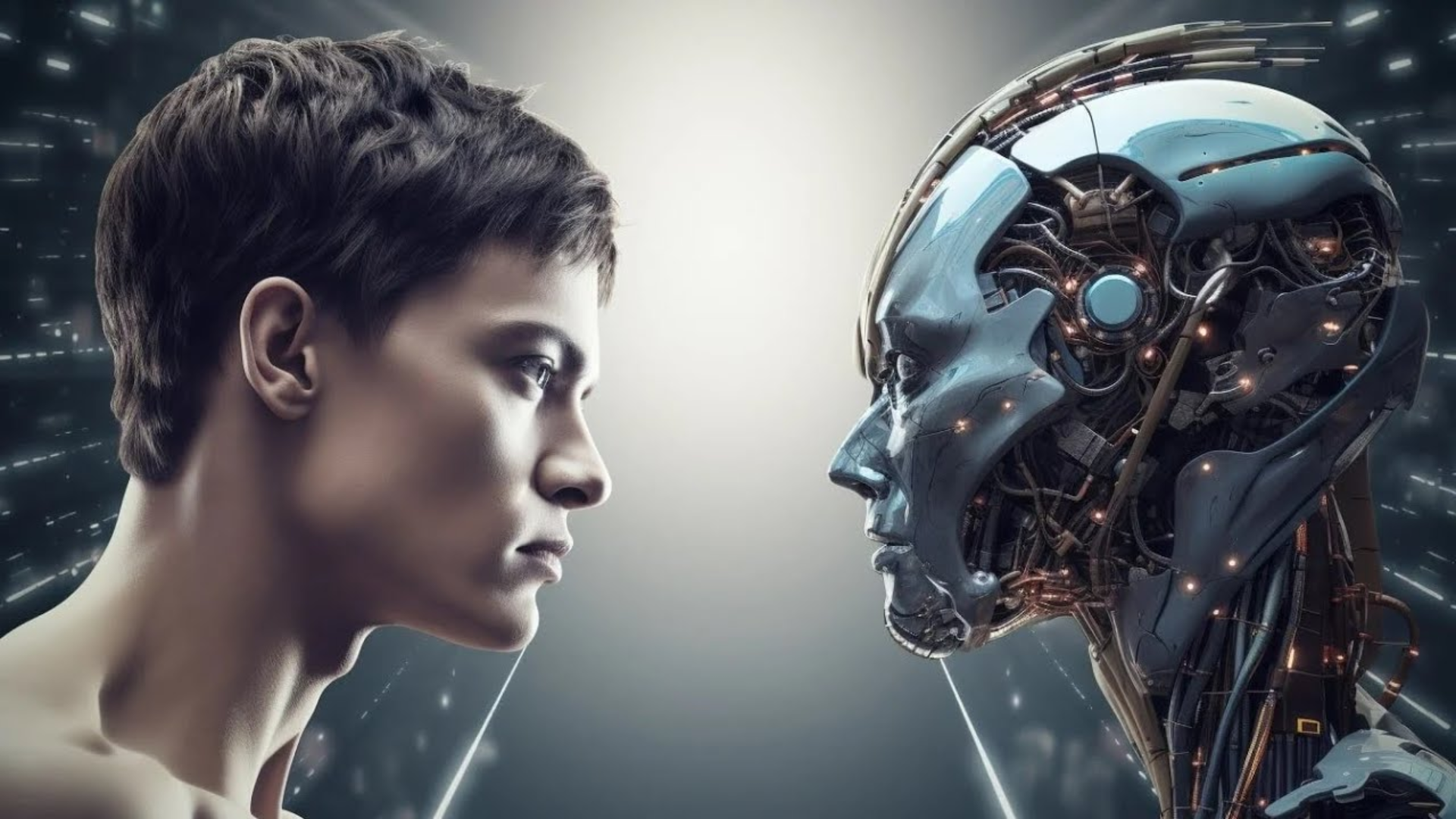
The relationship between humans and Artificial Intelligence (AI) is evolving at an unprecedented pace. What once began as a tool for automation and data processing has now entered a co-evolutionary phase, where human capabilities and AI systems are mutually influencing and enhancing each other. Experts argue that human-AI co-evolution has already begun, reshaping industries, education, healthcare, and even our understanding of intelligence itself.
In this article, we explore the concept of human-AI co-evolution, examine the technologies driving this transformation, analyze real-world examples, and discuss the societal, ethical, and economic implications of this emerging paradigm. By understanding this co-evolution, we can prepare for a future in which humans and AI evolve together, rather than in isolation.
What is Human-AI Co-Evolution?
Defining the Concept
Human-AI co-evolution refers to the mutual adaptation between human abilities and AI systems. Unlike traditional AI, which serves as a tool, co-evolution emphasizes collaboration, augmentation, and mutual improvement. In this framework:
-
AI systems learn from human behavior, decision-making, and feedback.
-
Humans adapt to AI-driven insights, tools, and workflows, enhancing cognitive and creative skills.
-
The interaction is iterative, where both humans and AI improve over time.
Experts describe this as a symbiotic relationship, where humans and AI evolve together to achieve tasks that neither could accomplish alone.
Historical Context
The seeds of co-evolution have existed since the advent of computing, but recent breakthroughs in machine learning, generative AI, and neurotechnology have accelerated this process. While early AI assisted with repetitive tasks, today’s AI systems influence strategy, creativity, and decision-making, marking the beginning of true co-evolution.
Key Technologies Driving Human-AI Co-Evolution
Generative AI and Creative Collaboration
Generative AI systems, such as large language models, image generators, and music composers, allow humans to expand creative horizons:
-
AI proposes novel ideas, drafts, or solutions.
-
Humans evaluate, refine, and contextualize AI outputs.
-
This collaboration accelerates creativity in art, design, writing, and research.
Experts highlight that this synergy enhances innovation while teaching humans to think in ways that AI can complement.
Brain-Computer Interfaces (BCIs)
BCIs are a major driver of human-AI co-evolution. By connecting the human brain directly with AI systems:
-
Cognitive tasks can be assisted or enhanced in real-time.
-
Learning and memory can be augmented through AI-guided training.
-
Humans gain faster access to complex datasets and predictive insights.
BCIs exemplify a physical and cognitive integration between humans and machines, creating a new dimension of intelligence co-evolution.
Decision-Support AI Systems
In sectors like healthcare, finance, and governance, AI is co-evolving with human decision-makers:
-
AI analyzes large datasets to identify patterns humans might miss.
-
Human experts validate insights, add ethical considerations, and provide contextual judgment.
-
Continuous feedback improves AI models, which in turn enhance human decisions.
This iterative process highlights the reciprocal growth inherent in co-evolution.
Autonomous and Adaptive AI
Next-generation AI systems are adaptive and self-improving, meaning:
-
They learn from human interactions and preferences.
-
They adjust recommendations, workflows, and strategies dynamically.
-
Humans, in turn, refine their behaviors and strategies based on AI feedback.
These adaptive systems facilitate mutual learning, a core aspect of human-AI co-evolution.
Examples of Human-AI Co-Evolution in Action
Healthcare Transformation
AI has transformed healthcare by:
-
Assisting in diagnostic imaging and predictive health analytics.
-
Helping doctors optimize treatment plans.
-
Guiding personalized medicine based on patient data.
Co-evolution occurs as medical professionals learn from AI insights and AI models improve with human feedback, creating a continuous loop of improvement.
Scientific Research and Discovery
AI accelerates scientific discovery by:
-
Predicting chemical reactions and molecular structures.
-
Designing experiments with higher efficiency.
-
Generating hypotheses that humans validate and explore further.
Human-AI co-evolution allows researchers to tackle problems faster, uncover hidden patterns, and explore areas beyond human intuition alone.
Education and Learning
AI-driven educational tools adapt to individual learning styles, suggesting:
-
Personalized lesson plans
-
Adaptive testing and skill assessments
-
Real-time tutoring and feedback
Teachers co-evolve with AI by refining instructional strategies, improving both teaching outcomes and AI models.
Creative Industries
Artists, writers, and designers now collaborate with AI to:
-
Generate ideas for storytelling, visual art, and music
-
Prototype designs faster than traditional methods
-
Experiment with new styles and forms
This co-evolution fosters a feedback loop of inspiration, where human creativity and AI capabilities grow together.
The Science Behind Co-Evolution
Machine Learning Feedback Loops
Co-evolution is fundamentally based on machine learning feedback loops:
-
Humans provide data and feedback.
-
AI adapts and improves its models.
-
Humans adjust their strategies based on AI outputs.
These loops create mutual reinforcement, resulting in accelerated cognitive and technological growth.
Cognitive and Behavioral Adaptation
Humans are naturally adaptable. When interacting with AI:
-
Cognitive load can be reduced.
-
Skills and problem-solving strategies evolve.
-
Decision-making becomes more data-informed and precise.
This behavioral adaptation ensures that humans evolve alongside AI rather than being replaced.
Societal Impacts of Human-AI Co-Evolution
Workforce Transformation
As AI integrates deeper into work processes:
-
Routine tasks are automated, freeing humans for strategic and creative roles.
-
Hybrid intelligence roles emerge, combining human judgment and AI efficiency.
-
Continuous learning becomes essential, as humans co-evolve with AI systems.
Ethical and Governance Considerations
Human-AI co-evolution raises critical ethical questions:
-
How do we ensure fairness and bias mitigation in AI recommendations?
-
Who is accountable when decisions are jointly influenced by humans and AI?
-
How do we manage privacy, security, and access to co-evolutionary technologies?
Experts stress that ethical frameworks must evolve alongside technology to guide responsible co-evolution.
Cultural and Cognitive Shifts
Co-evolution impacts society beyond work:
-
Humans may increasingly rely on AI for decision-making, changing cognitive habits.
-
Creative collaboration with AI could redefine art, literature, and entertainment.
-
Education and social interactions may adapt to AI-enhanced communication.
Challenges in Human-AI Co-Evolution
Dependency and Over-Reliance
One risk is that humans may become over-reliant on AI, reducing critical thinking and problem-solving skills. Maintaining balance is crucial.
Data Bias and Inequality
AI systems learn from human data, which can introduce bias. Co-evolution must prioritize diversity and inclusivity in AI training data.
Technological and Cognitive Gaps
Not all humans adapt at the same pace. Co-evolution may widen skill gaps if education and access are not equitably distributed.
The Future of Human-AI Co-Evolution
Towards Hybrid Intelligence
The ultimate goal of co-evolution is hybrid intelligence, where:
-
Humans and AI jointly solve complex problems.
-
AI augments human intuition, reasoning, and creativity.
-
Mutual learning accelerates scientific, industrial, and societal progress.
Autonomous Co-Learning Systems
Future AI may become autonomous co-learners, capable of:
-
Adjusting strategies independently based on human behavior.
-
Proposing innovations humans may not anticipate.
-
Supporting humans in global challenges such as climate modeling and healthcare.
Preparing for a Co-Evolved Society
To thrive in a co-evolved world, society must:
-
Invest in AI literacy and continuous learning
-
Develop adaptive governance and ethical standards
-
Foster interdisciplinary collaboration between humans and AI
By preparing, humans can maximize the benefits of co-evolution while mitigating potential risks.
Conclusion
Human-AI co-evolution has already begun, reshaping industries, research, creativity, and cognitive processes. Through collaboration, feedback loops, and hybrid intelligence, humans and AI are learning, adapting, and innovating together. While challenges exist—ethical, cognitive, and societal—the opportunities are immense. Experts agree that embracing co-evolution is key to future innovation, ensuring humans and AI grow in harmony rather than in competition. The era of human-AI symbiosis is not just near—it is already underway.
Frequently Asked Questions
What is human-AI co-evolution?
Human-AI co-evolution is the mutual adaptation between humans and AI systems, where AI learns from human input and humans enhance their skills and decision-making through AI.
How do humans and AI co-evolve?
Humans provide feedback, creativity, and ethical guidance, while AI provides analysis, predictions, and automation. This iterative interaction improves both human capabilities and AI performance.
Which technologies are driving human-AI co-evolution?
Key technologies include generative AI, brain-computer interfaces (BCIs), adaptive AI systems, decision-support tools, and hybrid intelligence platforms.
Can human-AI co-evolution improve creativity?
Yes. AI can generate ideas, drafts, or prototypes, while humans evaluate and refine them, leading to enhanced creativity in art, writing, design, and scientific research.
How is co-evolution impacting healthcare?
AI assists in diagnostics, predictive analytics, and personalized treatment plans. Physicians learn from AI insights, while AI improves with expert feedback, creating a cycle of mutual enhancement.
What are the societal benefits of human-AI co-evolution?
Co-evolution improves productivity, fosters innovation, enhances education, accelerates scientific discovery, and can address complex global challenges more efficiently.
What are the risks of human-AI co-evolution?
Answer: Risks include over-reliance on AI, bias in AI systems, widening skill gaps, ethical concerns, and potential loss of human critical thinking if balance is not maintained.
How does AI adapt to human behavior?
Answer: AI uses machine learning and feedback loops to analyze human interactions, preferences, and decisions, allowing it to provide personalized support and improve over time.
Can human-AI co-evolution replace human jobs?
Not entirely. While AI automates repetitive tasks, humans focus on creative, strategic, and ethical roles. Co-evolution emphasizes augmentation over replacement.
How can society prepare for human-AI co-evolution?
Society should invest in AI literacy, adaptive education, ethical governance frameworks, interdisciplinary research, and policies ensuring equitable access to AI technologies.
Leave a Reply