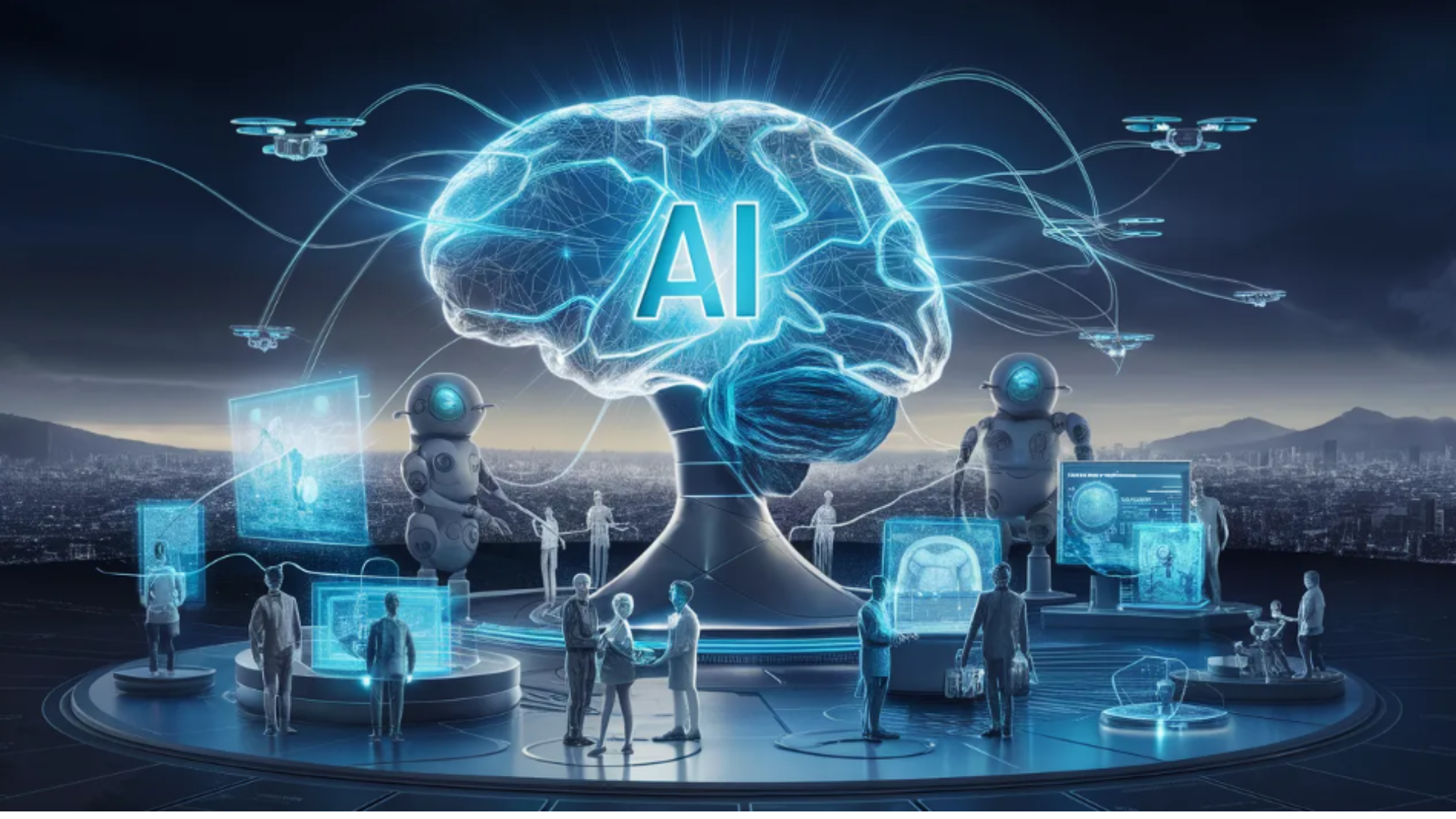
A few years ago, most people believed global power shifted slowly — through wars, elections, or economic cycles. Today, that belief feels outdated. Artificial Intelligence Is Reshaping Global Power Faster Than Anyone Expected, and many ordinary people feel overwhelmed trying to keep up. Students struggle to focus in a world of algorithmic distractions. Workers worry their skills may soon be irrelevant. Governments quietly race to control systems they barely understand.
This change doesn’t feel loud like history books describe revolutions. It feels silent, invisible, and deeply personal. One quiet update can change jobs, borders, and influence overnight. At TrueKnowledge Zone, this growing unease reflects a global truth: power is no longer just about weapons or money — it’s about intelligence, data, and speed.
How Power Traditionally Worked Before AI
Military Strength Defined Global Influence
For decades, global power was measured by visible force. Countries with strong armies, nuclear weapons, and advanced defense systems controlled negotiations and borders. Military dominance created fear, and fear created leverage. This model shaped the Cold War, regional conflicts, and international alliances. Power felt physical and obvious — tanks, troops, missiles. But military strength required time, resources, and public accountability. AI changes this by shifting influence into digital systems that operate silently, often without public awareness.
Economic Control Set the Rules
Economic power came next. Nations with strong currencies, manufacturing capacity, and trade control shaped global decisions. Sanctions, tariffs, and supply chains became tools of influence. But economic dominance still depended on human labor, physical infrastructure, and long-term planning. AI compresses these timelines. Algorithms now predict markets, automate production, and optimize logistics faster than any human system ever could, reducing the importance of traditional economic advantages.
Political Alliances Took Years to Build
Diplomacy once moved slowly. Trust between nations developed over decades through treaties, shared interests, and cultural exchange. Political power relied on negotiation and stability. AI-driven intelligence gathering now analyzes political behavior in real time, predicting decisions before leaders make them. This erodes the value of long-standing alliances and rewards nations that adapt quickly rather than those with historical influence.
Why Artificial Intelligence Changed the Power Timeline
Speed Has Become the New Currency
AI operates at machine speed, not human speed. Decisions that once took months now happen in seconds. From financial trades to cyber responses, speed determines dominance. Countries and corporations with advanced AI react faster than opponents can understand the situation. This creates asymmetry — power no longer depends on size but on responsiveness. Smaller players with better AI systems can outmaneuver larger, slower institutions.
Data Is More Valuable Than Resources
Oil, gold, and land once defined wealth. Today, data defines intelligence. AI systems learn from massive data sets, making accurate predictions and strategic decisions. Nations that control user data, surveillance systems, and digital platforms gain insight into behavior patterns at an unprecedented scale. This makes data-rich societies disproportionately powerful, even if they lack traditional resources.
Automation Removes Human Limitations
Human fatigue, bias, and emotion once limited decision-making. AI systems don’t sleep, panic, or hesitate. This creates efficiency but also danger. Automated decision systems in defense, finance, and governance reduce friction but increase risk. One poorly aligned algorithm can escalate conflicts faster than diplomacy can respond.
AI and the New Global Arms Race
Algorithms Are the New Weapons
Modern conflict no longer requires physical invasion. AI-driven cyber tools can disrupt power grids, elections, and financial systems remotely. These attacks are cheap, deniable, and fast. Unlike traditional weapons, algorithms can be copied, improved, and deployed instantly. This lowers the barrier to entry and increases global instability.
Defense Systems Are Becoming Autonomous
Many nations now rely on AI for threat detection and response. Autonomous drones, missile defense systems, and surveillance networks reduce reaction time. While this improves security, it also removes human judgment from critical moments. A false signal interpreted by AI could trigger irreversible actions without human intervention.
Power Is Concentrating Quietly
Unlike nuclear weapons, AI development happens largely in private labs and corporations. This concentrates power among tech companies and a few governments. There is no clear global treaty regulating AI weapons, creating a vacuum where experimentation outpaces ethical oversight.
Economic Power Shifts Driven by AI
Jobs Are Being Rewritten, Not Just Replaced
AI doesn’t simply eliminate jobs — it transforms them. Routine work disappears while cognitive and creative skills rise in value. Countries that invest in reskilling their populations gain economic resilience. Those that don’t face unrest and inequality. Economic power now depends on adaptability, not just employment numbers.
Productivity Gaps Are Expanding
AI-driven economies grow exponentially. Automation increases output without proportional labor costs. This widens the gap between AI-ready nations and those without infrastructure. Over time, this gap translates into political influence, trade dominance, and cultural impact.
Small Companies Can Challenge Giants
AI tools lower entry barriers. A small startup with strong algorithms can outperform legacy corporations. This decentralizes economic power but also creates volatility. Markets shift faster, and stability becomes harder to maintain.
Information Control and Psychological Influence
AI Shapes What People Believe
Recommendation algorithms influence news, opinions, and emotions. This soft power shapes public perception more effectively than propaganda ever did. Control over platforms equals control over narratives. Governments and corporations that understand this wield subtle but immense influence.
Deepfakes Blur Reality
AI-generated videos and audio erode trust. When people can’t distinguish truth from fabrication, social cohesion weakens. This benefits actors who thrive in confusion. Power shifts to those who can manipulate attention rather than facts.
Focus Has Become a Battleground
Mental focus is under constant attack. AI-driven content competes for attention, fragmenting concentration. Societies with distracted populations become easier to influence. Protecting attention is now a form of national resilience.
How AI Shifted Power in Finance
High-Frequency Trading Changed Markets
AI-driven trading systems execute thousands of trades per second. Human traders cannot compete. Financial power shifted from traditional institutions to algorithm designers. This increased efficiency but also volatility.
Crashes Happen Faster
AI amplifies both gains and losses. Market crashes now unfold in minutes, not days. Governments struggle to intervene quickly enough. This speed favors those already embedded in AI systems.
Regulation Is Always Behind
Financial regulators move slower than technology. This creates power imbalances where private systems influence global economies without democratic oversight.
AI in National Security Decisions
Predictive Surveillance Changed Policing
AI predicts crime patterns, border movements, and threats. While effective, it raises ethical concerns. Bias in data leads to biased outcomes, impacting civil liberties.
Intelligence Analysis Is Automated
AI processes vast intelligence data faster than analysts. This improves detection but reduces human context. Strategic nuance can be lost.
Decision Fatigue Is Reduced, but Risk Increases
Automated systems reduce cognitive load for leaders but increase dependency. Over-reliance weakens human strategic thinking over time.
Ethical Gaps in the Race for Power
No Universal Rules Exist
Unlike nuclear weapons, AI lacks global governance. Each country sets its own rules. This creates ethical fragmentation and competitive escalation.
Profit Often Overrides Safety
Private companies lead AI development. Their incentives prioritize growth over caution. This misalignment affects global stability.
Humans Are Still Accountable
Despite automation, responsibility remains human. Blaming algorithms avoids accountability. Ethical leadership is more important than ever.
What This Means for Ordinary People
Power Feels Distant but Hits Close
Global shifts affect jobs, privacy, and mental health. AI decisions shape daily life invisibly.
Skills Matter More Than Titles
Adaptability, critical thinking, and emotional intelligence protect individuals in an AI-driven world.
Awareness Is a Form of Power
Understanding how AI shapes systems reduces vulnerability. Informed citizens resist manipulation better.
How Societies Can Respond Wisely
Invest in Human Skills
Education must focus on creativity, ethics, and adaptability. These cannot be automated easily.
Demand Transparency
Public pressure can push governments and companies toward ethical AI practices.
Protect Mental Focus
Healthy information habits strengthen societal resilience.
Frequently Asked Questions
1. Why is AI changing global power so quickly
Because AI operates faster than human systems and scales instantly across borders.
2. Is AI more powerful than military weapons
AI enhances weapons rather than replaces them, making power less visible but more influential.
3. Can small countries compete using AI
Yes, if they invest strategically in data and talent.
4. Does AI increase inequality
Without regulation and education, yes. With smart policy, it can reduce it.
5. How does AI affect democracy
It influences information flow, which can strengthen or weaken democratic processes.
6. Are jobs permanently lost to AI
Some are, but many are transformed into new roles.
7. Who controls the most powerful AI today
Primarily large tech corporations and a few governments.
8. Is AI development safe right now
It is advancing faster than ethical frameworks can adapt.
9. Can AI decisions be trusted
Only when transparency and human oversight exist.
10. What can individuals do to stay relevant
Learn continuously, protect attention, and develop human-centered skills.
Final Thoughts and Gentle CTA
Artificial Intelligence Is Reshaping Global Power Faster Than Anyone Expected — but this shift isn’t destiny. Power isn’t just held by governments or machines; it’s shaped by awareness, ethics, and human choice. Stay curious. Question systems that move too fast to explain themselves. Protect your focus, your values, and your ability to think deeply. The future belongs not to those who fear AI, but to those who understand it — and remain fully human while doing so.
Leave a Reply