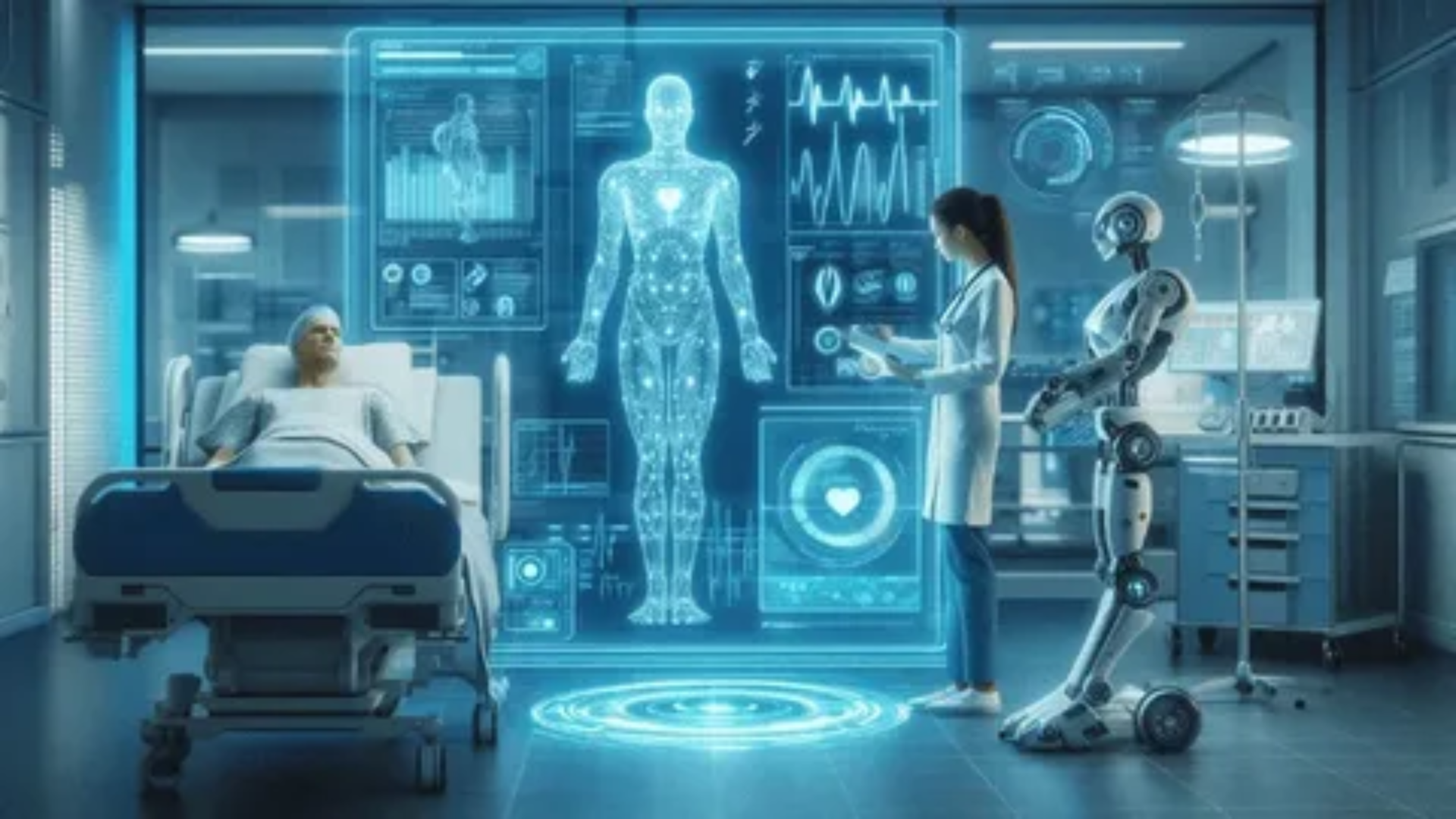
A New Era of Healthcare Powered by AI
Healthcare is entering a revolutionary phase, and Artificial Intelligence (AI) is at the center of this transformation. From early disease detection to robotic surgeries and personalized treatment plans, AI is no longer a concept of the future — it is already reshaping how healthcare systems operate worldwide.
As technology advances rapidly, AI in healthcare is expected to improve accuracy, reduce costs, save lives, and make medical services more accessible than ever before. This article explores how AI is changing healthcare in the future, real-world applications, benefits, challenges, and what patients and doctors can expect in the coming years.
What Is Artificial Intelligence in Healthcare?
Artificial Intelligence in healthcare refers to the use of machine learning, deep learning, natural language processing (NLP), and data analytics to simulate human intelligence in medical systems.
AI can:
-
Analyze massive medical datasets
-
Identify patterns faster than humans
-
Predict diseases before symptoms appear
-
Assist doctors in decision-making
Unlike traditional systems, AI continuously learns and improves over time.
How AI Is Transforming Disease Detection and Diagnosis
One of the most powerful impacts of AI in healthcare is early and accurate diagnosis.
AI-Powered Medical Imaging
AI systems can analyze X-rays, MRIs, CT scans, and ultrasounds with extremely high precision. In many cases, AI can detect:
-
Cancer
-
Brain tumors
-
Heart disease
-
Lung infections
much earlier than human radiologists.
Faster Diagnosis, Better Outcomes
Early detection saves lives. AI helps doctors make faster decisions, reducing misdiagnosis and enabling timely treatment.
Personalized Treatment and Precision Medicine
Traditional healthcare often follows a “one-size-fits-all” approach. AI is changing that.
AI-Based Personalized Care
AI analyzes:
-
Patient medical history
-
Genetic data
-
Lifestyle factors
-
Response to previous treatments
This allows doctors to create personalized treatment plans tailored specifically to each patient.
Precision Medicine in the Future
In the future, AI will help determine:
-
Which medicine works best for an individual
-
Correct dosage with minimal side effects
-
Personalized cancer treatments
This will drastically improve patient recovery rates.
AI in Drug Discovery and Development
Developing new drugs usually takes years and costs billions of dollars. AI is speeding up this process.
Faster Drug Research
AI can analyze chemical compounds and predict:
-
Drug effectiveness
-
Possible side effects
-
Interaction with the human body
This reduces research time from years to months.
Cost Reduction in Healthcare
By automating research and trials, AI significantly lowers the cost of drug development, making treatments more affordable in the future.
Robotic Surgery and AI-Assisted Operations
AI-powered surgical robots are transforming complex medical procedures.
Higher Precision and Safety
AI-assisted robots can:
-
Perform minimally invasive surgeries
-
Reduce human error
-
Improve accuracy during operations
Surgeons use AI as a support system, not a replacement.
Faster Recovery for Patients
Robotic surgeries result in:
-
Smaller incisions
-
Less pain
-
Shorter hospital stays
This improves patient experience and outcomes.
Virtual Doctors and AI Chatbots
AI is also changing how patients interact with healthcare providers.
24/7 AI Medical Assistants
AI chatbots can:
-
Answer medical questions
-
Analyze symptoms
-
Provide health advice
-
Schedule appointments
This improves accessibility, especially in remote areas.
Reducing Doctor Workload
AI handles routine tasks, allowing doctors to focus on critical cases and patient care.
Predictive Analytics and Preventive Healthcare
Prevention is better than cure — and AI excels at prediction.
Predicting Diseases Before They Happen
AI analyzes patient data to predict:
-
Heart attacks
-
Diabetes
-
Stroke risks
-
Chronic illnesses
Doctors can intervene early, preventing serious health issues.
Smarter Public Health Systems
Governments and hospitals use AI to:
-
Predict disease outbreaks
-
Manage hospital resources
-
Improve emergency response
AI in Mental Health Care
Mental health is gaining global attention, and AI is playing a crucial role.
AI-Based Mental Health Support
AI tools can:
-
Detect depression and anxiety through speech and text analysis
-
Offer mental health support via apps
-
Track emotional patterns over time
This helps identify mental health issues early and reduce stigma.
Benefits of AI in Healthcare
AI brings several long-term benefits to the healthcare industry:
-
Faster and more accurate diagnosis
-
Lower healthcare costs
-
Improved patient outcomes
-
Better accessibility in rural areas
-
Reduced workload for medical staff
-
Data-driven decision making
Challenges and Ethical Concerns
Despite its advantages, AI in healthcare faces challenges.
Data Privacy and Security
Medical data is highly sensitive. Ensuring patient privacy is a major concern.
Bias in AI Algorithms
If AI is trained on biased data, it may produce inaccurate or unfair results.
Human Oversight Is Still Needed
AI should assist doctors, not replace them. Human judgment remains essential in medical decisions.
The Future of AI in Healthcare
The future of healthcare will be AI-driven, patient-centric, and data-powered.
In the coming years, we can expect:
-
Fully AI-integrated hospitals
-
Real-time health monitoring via wearables
-
Smarter telemedicine platforms
-
AI-powered health predictions
AI will not replace doctors — but doctors who use AI will replace those who don’t.
Frequently Asked Questions (FAQs)
Will AI replace doctors in the future?
No. AI will assist doctors, not replace them. Human expertise and empathy remain irreplaceable.
Is AI in healthcare safe?
Yes, when used responsibly with proper regulations and data security measures.
Can AI really detect diseases early?
Yes. AI systems are already detecting diseases like cancer earlier than traditional methods.
Is AI healthcare expensive?
Initially, it may seem costly, but AI reduces long-term healthcare costs by improving efficiency.
Final Thoughts
How AI is changing healthcare in the future is no longer a prediction — it is happening now. From diagnosis to treatment, prevention to recovery, AI is transforming every aspect of healthcare.
For patients, this means better care, faster treatment, and healthier lives. For doctors, it means smarter tools and improved decision-making. As AI continues to evolve, the healthcare industry will become more intelligent, accessible, and effective than ever before.
Leave a Reply