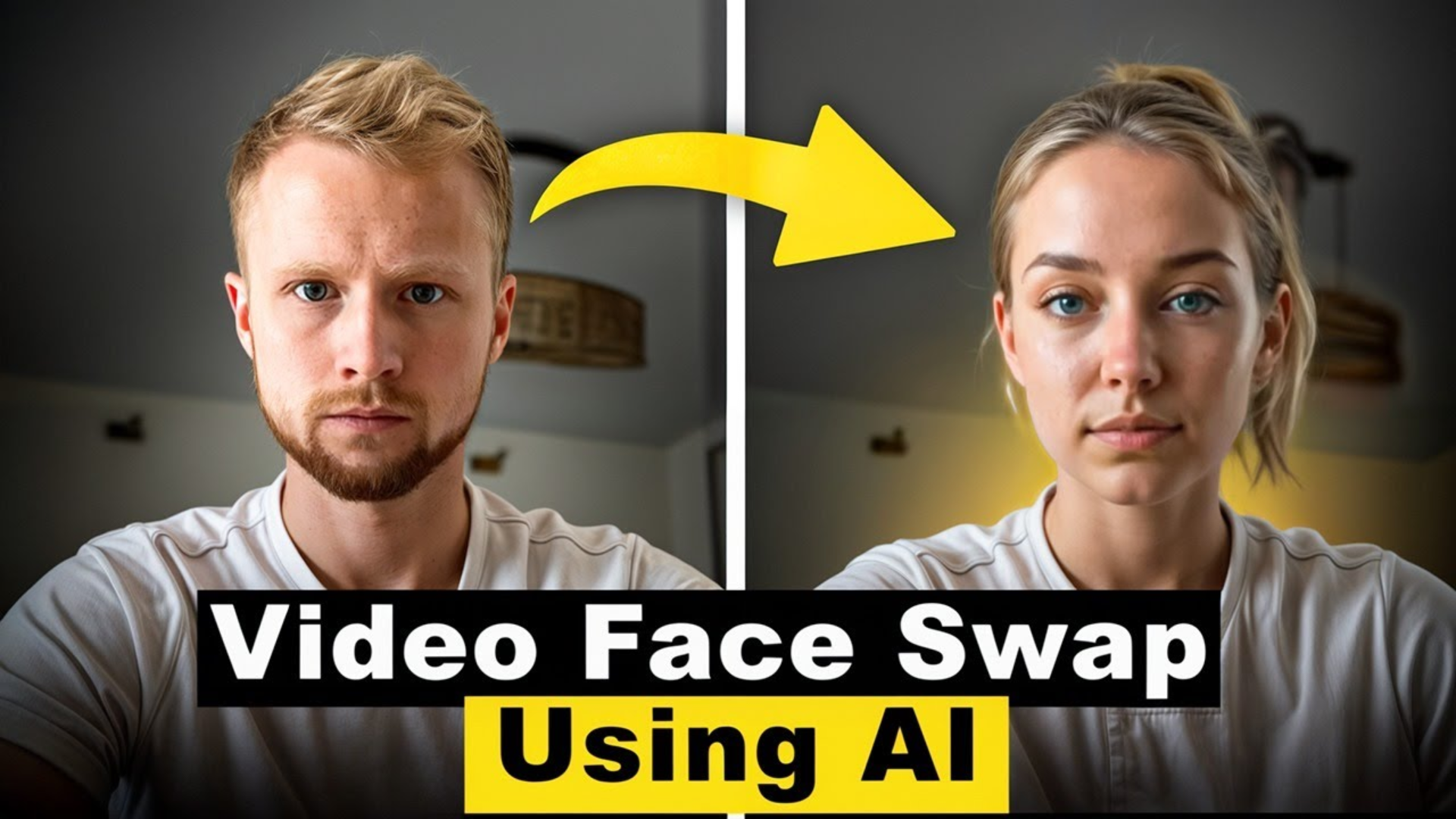
The Stolen Smile: How a Simple Selfie Becomes a Weapon in an AI Face Swap Scam
You get a text. It’s a friend, their name and picture right there in your messages. “Hey! Are you free for a quick video call? I need to show you something.” You join, and there they are—their face, their smile, their familiar expression. They look right at you and say, “I’m in a bind, can you spot me a few hundred bucks? I’ll pay you back tonight.” You see them, you hear them. So you send it. But the person on the other end of that call was never your friend. It was a stranger, wearing your friend’s face like a digital mask, manipulated in real-time by artificial intelligence. AI face swap scams explained begin with this chilling reality: the most basic unit of trust online—the human face—can now be hijacked, animated, and weaponized with frightening ease. This isn’t about complex Hollywood CGI; it’s about apps you can download right now, turning a stolen social media photo into a live, talking puppet for fraud.
At TrueKnowledge Zone, we’ve moved from warning about this theoretical threat to documenting its real-world consequences. The scam is devastating not because it’s technically complex, but because it’s psychologically perfect. It bypasses every warning you’ve ever heard about strange links and Nigerian princes. It comes directly from the face of someone you know and trust. Let’s pull back the curtain on exactly how this modern-day digital forgery works, and more importantly, how you can spot the seams in the mask before it’s too late.
The Anatomy of the Swap: How the Digital Mask is Made
The technology, often called “real-time deepfakes” or “live face swaps,” uses a form of AI called generative adversarial networks (GANs). But for the victim, the process feels like magic. Here’s the scammer’s step-by-step playbook:
Step 1: The Digital Heist – Stealing Your Face
The scammer starts by harvesting a “face model.” They don’t need much. A few clear, high-resolution photos from your social media feed—a profile picture, a vacation selfie, a group photo where your face is visible—are enough. These are fed into face-swapping software (like DeepFaceLive, Roop, or commercial apps like Reface) which analyzes the images to create a mathematical model of your facial geometry: the distance between your eyes, the shape of your jaw, your unique smile lines.
Step 2: The Puppeteer Sets the Stage
The scammer now needs a “source” – their own live video feed. They position themselves in front of a webcam, often in neutral lighting. The AI software, now loaded with your face model, works in real-time. As the scammer moves their head, talks, and smiles, the software does two things simultaneously:
-
It tracks the scammer’s facial movements and expressions.
-
It wraps your stolen face model over theirs, like a hyper-realistic digital mask, matching every twist and turn.
Step 3: The Live Deception – A Mask That Talks
On the victim’s screen, they see your face performing the scammer’s actions. If the scammer says, “I need money,” your lips move in sync. If they feign distress, your face shows concern. The software even handles lighting adjustments and skin tone blending to make the illusion more convincing. This can all happen on a decent laptop, with a delay of just milliseconds—imperceptible in a video call.
The Scam in Action: Three Predatory Scripts
This technology is plugged into classic cons, supercharging them with credibility.
1. The “Friend in Need” Emergency Scam
-
The Hook: You receive a message from a friend or family member on WhatsApp, Facebook Messenger, or Instagram. “Can you video chat real quick? It’s urgent.” The urgency lowers your guard.
-
The Performance: On the call, your “friend’s” face looks slightly off, but they explain it’s a bad connection. They spin a tale of a minor emergency—a locked car, a missed flight, a medical bill—and need you to send money via Cash App, Venmo, or Zelle right now.
-
Why It Works: The face creates instant trust. The real-time interaction (they can respond to your questions) makes it feel authentic. The pressure to help a loved one overrides skepticism.
2. The “Romance Puppet” Long Con
-
The Hook: On a dating app, you match with an attractive person. They quickly want to move to video chat on a different platform.
-
The Performance: On video calls, they appear as their profile picture. The conversations are intimate and build trust over weeks. Eventually, the “emergencies” begin: a sick relative, a business opportunity. They ask for financial help, always via irreversible methods.
-
Why It Works: The face swap creates a false sense of intimacy and authenticity. The scammer invests time to build a real emotional connection before the fraud, making the payoff much larger.
3. The “Verified” Impersonation Scam
-
The Hook: This targets businesses. An employee receives a video call or a recorded message from what appears to be a company executive (CEO, CFO).
-
The Performance: The “executive” gives instructions for an urgent wire transfer or to share sensitive login credentials, citing a confidential deal.
-
Why It Works: It exploits corporate hierarchy and the pressure to comply with authority. The face and voice (often cloned separately) provide a terrifying level of verification that an email cannot.
The Glitches in the Matrix: How to Spot a Live Face Swap
The technology is good, but not perfect. Your job is to become a discerning observer. Look for these tells:
The Uncanny Valley of Movement:
-
The “Sticky” Face: The swapped face might not perfectly adhere to the underlying head movements. Watch the neck and hairline—does the face seem to “float” or slide slightly?
-
Unnatural Eye Contact: The eyes are the hardest to fake. They may lack depth, have a lifeless “doll-like” gaze, or show imperfect tracking. Do the reflections in the eyes look real, or are they just black voids?
-
Emotion Mismatch: The words may express panic, but the facial micro-expressions don’t fully match. The smile doesn’t reach the eyes (lack of “crow’s feet”), or expressions change too abruptly.
Technical and Contextual Red Flags:
-
The “Bad Connection” Excuse: Scammers will often blame glitches, blurriness, or frozen screens on poor internet to explain away imperfections.
-
Poor Lip-Syncing: Watch carefully on plosive sounds (“P,” “B,” “M”). The mouth movement might be slightly off or mushy.
-
Unusual Background or Lighting: Is the person in a strangely generic or blank space? Is the lighting flat and overly perfect, unlike a typical home or office?
-
The Immediate Money Request: This is the universal payload. No legitimate emergency is solved only by sending cash via an app in the next 10 minutes.
Your Digital Self-Defense Protocol
Knowing how the scam works is half the battle. The other half is having an unbreakable rule set.
1. Establish a “Video Call Code Word” with Close Contacts.
This is your most powerful tool. With family and close friends, agree on a random, secret word or phrase. If someone who looks like them asks for money on a video call, you demand the code word. No word, no money. It’s a simple, foolproof verification step.
2. Always Verify Through a Separate Channel.
This is the golden rule. Hang up the video call. Then, immediately call or text the person on the number you already have for them and ask, “Did you just video call me?” Do not use any contact info provided during the suspicious call.
3. Slow Down and Question Urgency.
Scammers weaponize haste. Breathe. A real friend in a real bind will understand if you say, “Let me call you right back on your other number to confirm.” Their reaction is telling—a scammer will push and panic; a real friend will agree.
4. Limit Your Public “Face Data.”
Be mindful of your social media. Do you have hundreds of high-quality, close-up selfies publicly available? You are providing a training dataset. Consider making profiles private or being more selective about what you post.
A Real-World Snapshot: “Mark’s” Bad Day
David’s friend Mark messaged him on Instagram: “Bro, my phone’s dying, can you WhatsApp video me ASAP?” David joined. Mark’s face was a little pixelated. “I crashed my rental car,” Mark said, his face convincingly stressed. “I need $1,500 for the deductible right now or they’ll impound it. I’m so sorry.” David, seeing his friend’s face, opened his Cash App. But something felt off—Mark’s hairline seemed to flicker. David blurted out, “Dude, what’s our secret pizza topping from college?” The face on screen froze, then the call dropped. David called Mark’s real number. Mark was fine, at home. The scammer had used Mark’s Instagram photos to become him, live.
The Lesson: A single, unexpected verification question—a shared memory a data scraper can’t find—shattered the entire illusion.
AI face swap scams represent a fundamental corruption of our most trusted social signal. They turn our faces against us. But the vulnerability isn’t in the technology; it’s in our assumption that a face on a screen is proof of identity. By adopting a new rule—verify, then trust—you reclaim your security. In the age of the stolen smile, your greatest shield is your willingness to pause, to question, and to make that second call. Your attention is the one thing the scammer cannot fake.
Leave a Reply