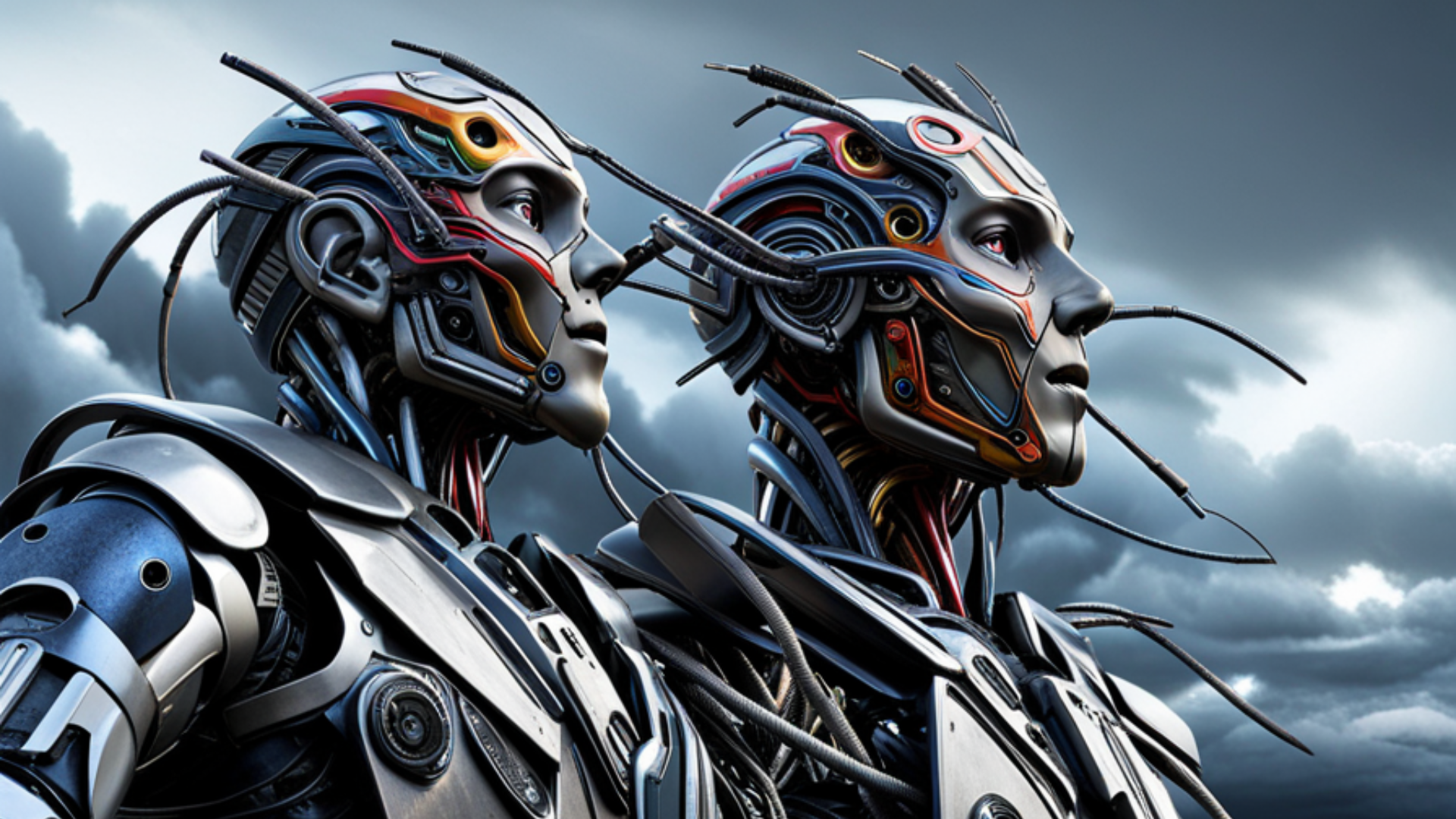
Artificial Intelligence is often presented as the technology that will save time, improve lives, and solve global problems. While these benefits are real, there is another side that many people ignore. The dark side of AI future raises serious concerns about privacy, jobs, control, and human freedom.
As AI becomes more powerful, understanding its risks is just as important as celebrating its advantages.
What Does the Dark Side of AI Mean?
The dark side of AI refers to the negative consequences, risks, and ethical challenges that arise from advanced artificial intelligence.
These issues include:
-
Loss of jobs
-
Invasion of privacy
-
AI bias and discrimination
-
Over-dependence on machines
-
Loss of human control
If not managed properly, AI could create more problems than solutions.
Job Loss and Economic Inequality
One of the biggest fears surrounding AI is mass job displacement.
How AI Can Replace Human Workers
AI can automate tasks in:
-
Factories
-
Customer support
-
Data analysis
-
Transportation
Millions of workers may struggle to adapt, leading to unemployment and economic imbalance.
Growing Wealth Gap
Companies that control AI technology may become extremely powerful, increasing the gap between rich and poor.
Loss of Privacy and Mass Surveillance
AI thrives on data — and that data often comes from people.
AI and Personal Data
AI systems collect:
-
Online behavior
-
Facial recognition data
-
Voice recordings
-
Location history
This raises serious privacy concerns.
A Surveillance Society
In the dark side of AI future, governments and corporations could use AI to monitor citizens constantly, reducing personal freedom.
Bias, Discrimination, and Unfair Decisions
AI is only as fair as the data it is trained on.
How AI Bias Happens
If training data is biased, AI can:
-
Discriminate in hiring
-
Misjudge criminal cases
-
Deny loans unfairly
-
Misdiagnose patients
This can silently reinforce social inequalities.
AI Dependency and Loss of Human Skills
As AI becomes smarter, humans may become more dependent.
Decline in Critical Thinking
Over-reliance on AI can reduce:
-
Problem-solving skills
-
Creativity
-
Independent decision-making
Humans risk becoming passive users rather than active thinkers.
Misinformation and Deepfakes
AI is already being used to create fake content.
The Rise of Deepfakes
AI can generate:
-
Fake videos
-
Fake voices
-
Fake news
This threatens trust in media, politics, and even personal relationships.
AI in Warfare and Cybercrime
One of the most dangerous aspects of AI lies in its misuse.
Autonomous Weapons
AI-powered weapons can make life-and-death decisions without human judgment.
Smarter Cyber Attacks
Hackers use AI to:
-
Automate cybercrime
-
Bypass security systems
-
Launch large-scale attacks
This makes digital security more complex and dangerous.
Will AI Ever Go Out of Control?
A common fear is that AI could surpass human intelligence.
While AI does not have emotions or intentions, poorly designed systems could:
-
Make harmful decisions
-
Act unpredictably
-
Cause large-scale damage
This is why strong human oversight is essential.
Ethical Challenges and Responsibility
The future of AI depends on ethical choices made today.
Key questions include:
-
Who controls AI?
-
Who is responsible for AI mistakes?
-
How much power should AI have?
Without global rules and accountability, AI risks becoming dangerous.
Can the Dark Side of AI Be Controlled?
Yes — but only with responsible development.
What Needs to Be Done
-
Strong regulations
-
Transparent AI systems
-
Ethical guidelines
-
Human-centered design
-
Public awareness
AI should serve humanity, not dominate it.
The Balanced Future: AI With Human Control
The future should not be humans vs AI, but humans guiding AI.
When used responsibly, AI can:
-
Improve lives
-
Solve global challenges
-
Support human creativity
Ignoring the dark side, however, could lead to serious consequences.
Frequently Asked Questions (FAQs)
Is AI dangerous for the future?
AI can be dangerous if misused, but safe if developed responsibly.
Will AI take over the world?
No. AI lacks consciousness, but poor control can cause harm.
Can AI be regulated?
Yes. Governments and organizations are already working on AI regulations.
Should people fear AI?
People should not fear AI, but they should understand and manage its risks.
Final Thoughts
The dark side of AI future is real — but it is not unavoidable. AI is a powerful tool, and like any tool, its impact depends on how humans use it.
By focusing on ethics, transparency, and responsibility, we can ensure AI remains a force for good rather than a threat to humanity.
Leave a Reply