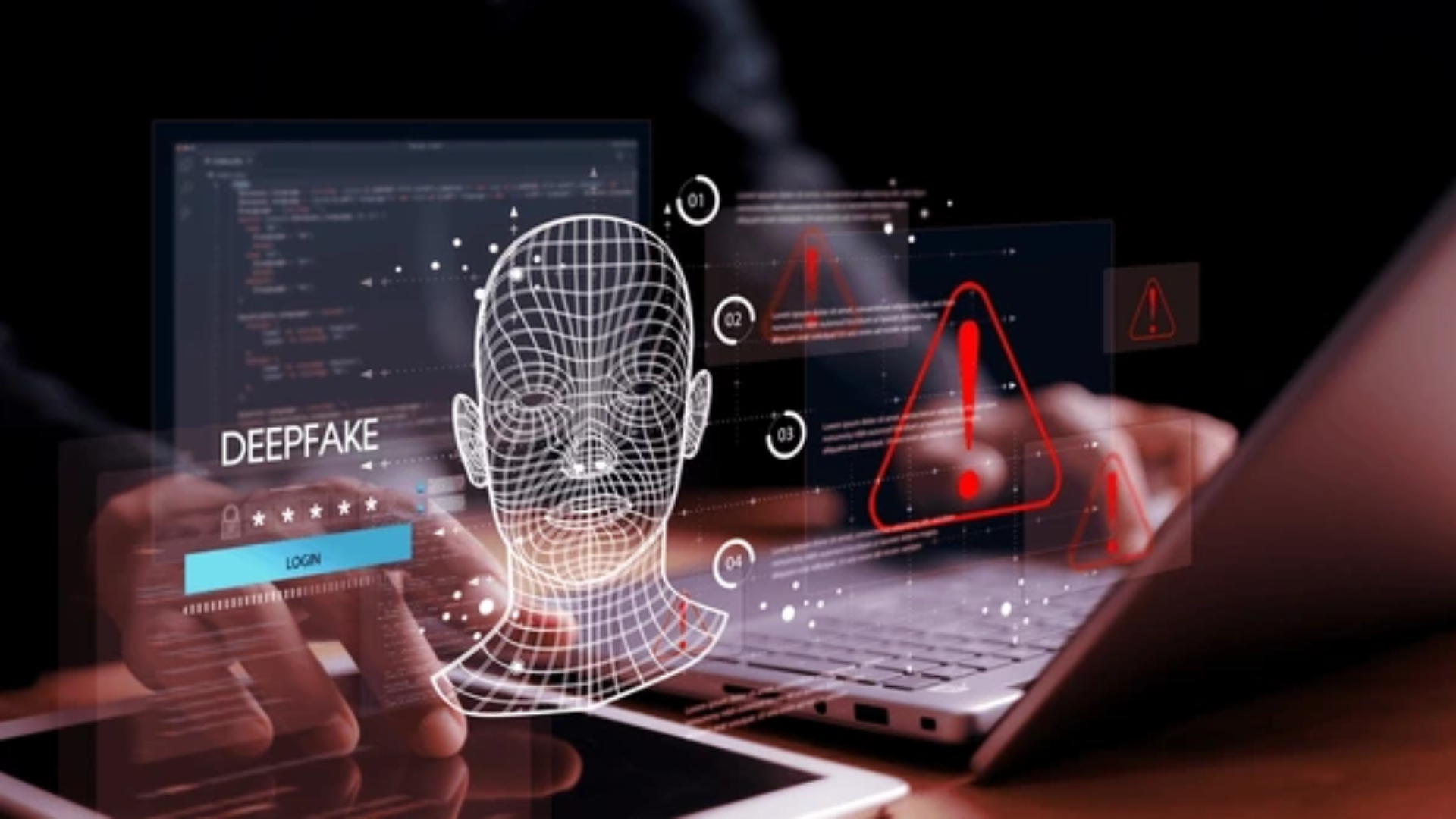
The Arms Race for Reality: A Guide to Deepfake Detection Tools That Actually Work
You’ve seen the video. A politician says something outrageous. A celebrity endorses a scam. A loved one asks for money in a panic. A part of you whispers, This can’t be real. But how do you know? In the dizzying age of synthetic media, that question—how to know what’s real—has become one of the most pressing of our time. The promise of deepfake detection tools that actually work feels like a digital lifeline. But the landscape is a chaotic arms race: for every detection method invented, a new method of generation evolves to bypass it. The truth is, there is no single “magic bullet” tool. Instead, effective deepfake defense is a layered strategy, combining technological forensic analysis with an upgraded form of human skepticism. It’s about knowing which tools are reliable for which tasks, and understanding that the most crucial detector will always be the one between your ears.
At TrueKnowledge Zone, having tested everything from academic prototypes to commercial platforms, we can cut through the hype. The tools that “actually work” aren’t those that promise 100% accuracy (a red flag), but those that excel in specific, high-stakes contexts and, most importantly, teach us how to think about digital authenticity. Let’s explore the current arsenal.
The Foundation: How Detection Tools “Think”
Before evaluating tools, understand what they’re looking for. Deepfakes, especially video deepfakes, are statistical predictions, not real recordings. This leaves forensic footprints:
-
Digital Artifacts & Inconsistencies: AI generators struggle with perfect physics and biology. Tools look for:
-
Facial Blood Flow: Real skin shows subtle, rhythmic color changes from blood circulation. Deepfakes often have unnaturally static skin texture.
-
Lighting & Reflection Inconsistency: The way light hits the eyes (corneal reflection) or creates shadows on the face often doesn’t match the scene’s light sources.
-
Physiological Impossibilities: Irregular or missing blinking, unnatural breathing patterns that don’t sync with speech.
-
-
Data-Level Anomalies: This is the “digital DNA.”
-
Compression Artifacts: The way a video is encoded and compressed leaves patterns. A deepfake segment spliced into a real video may have mismatched compression.
-
Metadata Analysis: Examining the file’s hidden data for signs of manipulation or AI model signatures.
-
-
Behavioral & Contextual Analysis: The most human-like approach.
-
Emotional Incongruence: Does the vocal stress match the facial micro-expressions? True fear has specific, hard-to-fake physiological markers.
-
Semantic Analysis: Does what the person is saying align with their known beliefs, the context, and logical reality?
-
Tier 1: Proactive Platform-Level Tools (The Digital Immune System)
These are tools deployed by large platforms to scan billions of uploads. You don’t directly control them, but they form your first line of defense.
1. Microsoft’s Video Authenticator
-
How It Works: This tool provides a “confidence score” by analyzing the blending boundary of a deepfake—the subtle gray-level fade at the edge where the fake face merges with the real background that is invisible to the human eye. It looks for the “softening” effect common in AI-synthesized imagery.
-
Does It Actually Work? Yes, for now, on many common deepfakes. It was highly effective against the first wave of face-swap deepfakes. However, as generators improve blending, its edge-detection advantage narrows. It’s a powerful part of a toolkit, not a standalone solution.
2. Google’s SynthID
-
How It Works: This is a provenance tool, not a detective tool. It imperceptibly watermarks AI-generated images and audio at the point of creation (e.g., within Google’s own Imagen and Lyria models). The watermark is detectable by its tools even after cropping or editing. This is a “pre-bunking” strategy.
-
Does It Actually Work? Yes, brilliantly for content it watermarks. Its limitation is scale—it only works on content from partnered AI models. It doesn’t help identify deepfakes made with other tools, but it pioneers a critical future standard: verifiable origin.
Tier 2: Forensic & Analyst Tools (For Investigators & High-Stakes Verification)
These are used by journalists, fact-checkers, and security professionals. They require more expertise but offer deeper analysis.
1. Sensity AI (formerly Deeptrace)
-
How It Works: A full-platform threat intelligence service. It uses a multi-method AI detection engine that analyzes visual, audio, and network-level signals. It also actively crawls the web to map the spread of deepfakes, providing context on campaigns.
-
Does It Actually Work? Yes, for organizations. It’s one of the most comprehensive commercial solutions. Its strength is in correlation and threat intelligence—understanding who is using a deepfake and why, not just flagging it. This contextual layer is vital.
2. InVID / WeVerify Verification Plugin
-
How It Works: This is a Swiss Army knife for digital journalists. While not solely a deepfake detector, its forensic capabilities are essential. It allows you to:
-
Reverse image/video search to find original content.
-
Analyze metadata to check the origin and editing history of a file.
-
Break a video into keyframes to examine individual shots for inconsistencies.
-
-
Does It Actually Work? Yes, as a critical investigative workflow tool. It doesn’t give a simple “fake/real” answer. It empowers a human investigator to gather the digital evidence needed to make a determination. It’s arguably more reliable long-term than any single AI detector because it focuses on verifiable facts.
Tier 3: Consumer-Facing Tools & Techniques (For Everyday Vigilance)
These are apps and websites you can use, but they come with major caveats about reliability.
1. AI or Not, Hugging Face Deepfake Detection Space
-
How It Works: You upload a file or provide a URL, and a public AI model gives a probability score. These are often demos of academic research (like models from the University of Buffalo focusing on corneal reflections).
-
Do They Actually Work? They are inconsistent and context-dependent. They can be very good at spotting the specific type of fake they were trained on (e.g., low-quality face-swaps) but fail catastrophically on new methods. Using them requires understanding their training limits. Never trust their result in isolation.
2. The “Human+ Tool” Checklist (The Most Reliable Everyday Method)
This isn’t a software tool, but a procedural one that leverages your own perception alongside technology.
Step 1: The Pause. Before sharing or believing, stop. Ask: Who benefits from me believing this? What is my emotional reaction?
Step 2: The Lateral Search (Using InVID/Browser Tools). Right-click on a paused video frame and “Search image with Google.” Find the original source or similar content. Check the uploader’s history.
Step 3: The Forensic Eye Test.
-
Eyes: Zoom in. Do the reflections make sense? Is blinking natural?
-
Audio: Listen with eyes closed. Does the voice sound fully embodied? Then watch on mute. Do the expressions match what you know is being said?
-
Hair and Edges: Look for a faint, ghostly “halo” or flickering around the hairline and jaw.
Step 4: The Contextual Reality Check. Does this make logical sense? Would this person be in this setting? Is there a trusted, primary source (official website, major news outlet) reporting the same thing?
The Inherent Limitations: Why No Tool is Foolproof
-
The Adversarial Feedback Loop: Detection tools are AI models trained on known deepfakes. The next generation of deepfake AI is trained to fool those detectors, creating a cycle where each leapfrogs the other.
-
The “Black Box” Problem: Many tools give a score without explaining why, offering no opportunity for human oversight or learning.
-
The Data Bias: Tools trained on Western celebrities may fail on faces from other ethnicities, creating biased results.
-
The Compounding Effect: A tool might be 95% accurate. But if only 1 in 1,000 videos is a deepfake, the vast majority of its “fake” alerts will be false positives, eroding trust.
The Future: Beyond Detection to Provenance
The most promising path forward is shifting from detection to provenance and authentication.
-
The Coalition for Content Provenance and Authenticity (C2PA): This is the key initiative. It’s developing a technical standard for cryptographically signing media at the point of capture (e.g., by your phone’s camera). This “Content Credential” travels with the file, allowing any platform to verify its origin and editing history. Your camera would cryptographically sign a photo as “real,” while an AI generator would sign its output as “AI-generated.” This is the tool that could actually work at scale, moving the burden from spotting fakes to verifying authentic origin.
Conclusion: A Defensive Mindset is Your Best Tool
Today, the most effective “deepfake detection tool” is a composite:
-
For platforms: Microsoft’s Video Authenticator-style filters + provenance watermarks (SynthID).
-
For investigators: Sensity AI for intelligence + InVID for forensic legwork.
-
For you: The “Human+ Tool” Checklist.
The tools that actually work are those that augment, not replace, human judgment. They provide data points—a confidence score, a metadata anomaly, a mismatched reflection—that feed into a slower, more deliberate process of verification. In this arms race, the ultimate victory won’t belong to the best detector, but to the society that best learns to value and verify authenticity. Start by trusting your unease, then use the available tools to investigate it. Your skeptical pause is the first and most important line of defense.
Leave a Reply