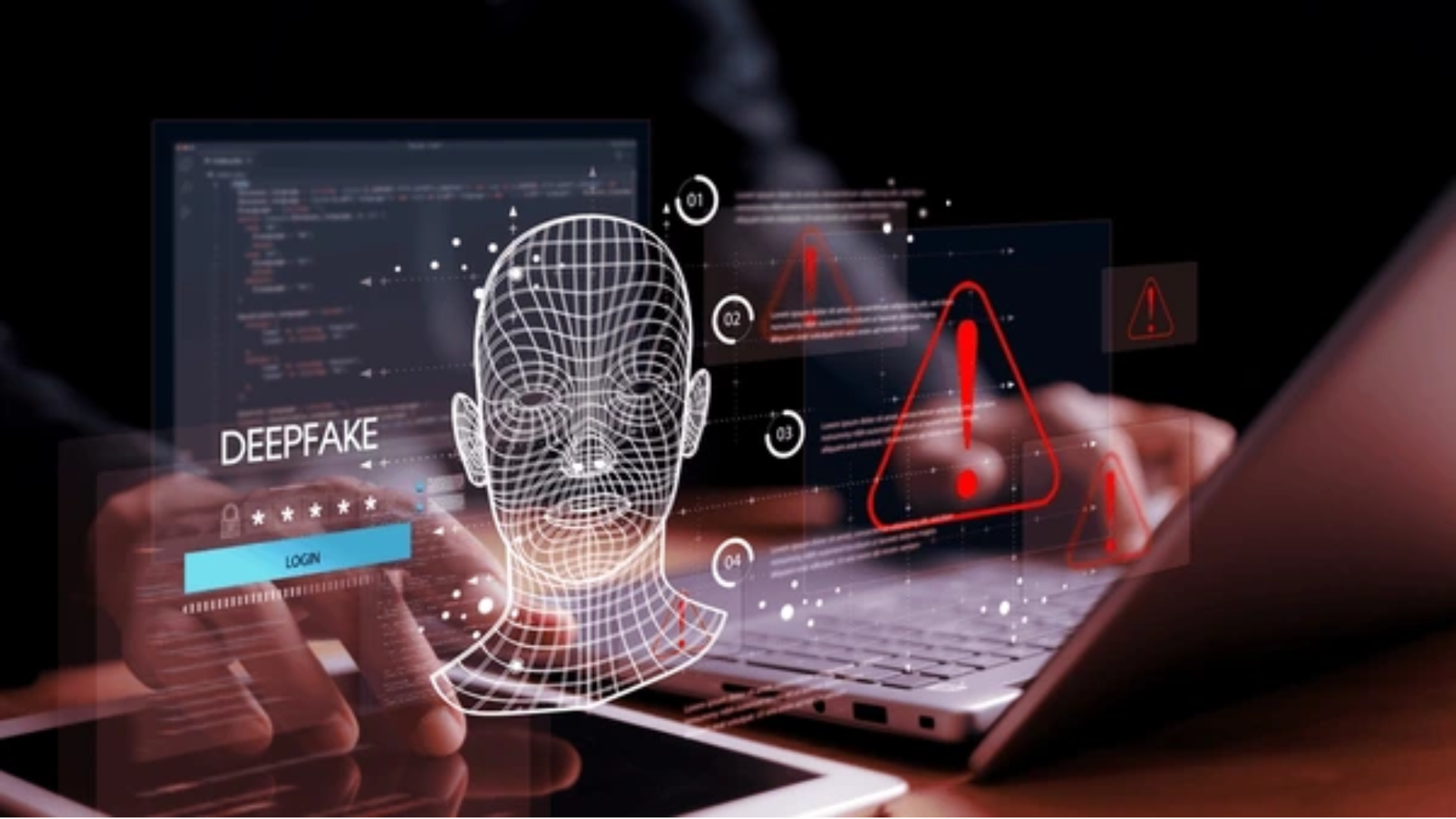
The Digital Doppelgänger: How Deepfake Technology Became a Criminal’s Perfect Mask
You receive a video call from your boss. It’s him—the familiar crease in his brow, the slight tilt of his head when he’s thinking, the voice that has given you a hundred directives. “I need you to wire $500,000 to this new vendor account before the close of business. It’s confidential. Send me the confirmation.” You comply. The video call, the face, the voice… it was all a lie. A synthetic puppet, animated by a criminal thousands of miles away using technology that can now be rented by the hour. Deepfake technology is being abused by criminals not in some nebulous future, but in a devastating, present-tense crime wave. This is no longer about funny celebrity face-swaps or political satire. It’s about the weaponization of reality itself, where the most fundamental tools we use to verify truth—our eyes and ears—have been systematically compromised. The abuse is moving faster than our laws, our ethics, and our personal defenses can possibly keep up.
At TrueKnowledge Zone, tracking the shift from theoretical threat to active tool in the criminal arsenal, we see a pattern: deepfakes are the ultimate force multiplier for age-old cons. They don’t invent new crimes; they supercharge the old ones with a terrifying layer of authenticity. The criminal isn’t just lying to you anymore; they’re bringing a digital ghost of someone you trust to stand beside them and swear the lie is true.
The New Toolkit: From Funhouse Mirror to Fraud Factory
Understanding the abuse requires seeing how the tool has evolved. Deepfake technology has been democratized, moving from PhD-level coding to click-button apps and dark web services.
The Democratization of Deception
Five years ago, creating a convincing deepfake required a powerful computer, technical skill, and days of rendering. Today:
-
Consumer Apps: Websites and mobile apps allow anyone to upload a photo and map it onto a stock video in minutes.
-
Open-Source Models: Freely available AI models like Stable Diffusion and open-source face-swapping code put powerful capabilities in the hands of anyone with a mid-range laptop.
-
Fraud-as-a-Service (FaaS) on the Dark Web: For criminals without technical skill, dedicated services offer “deepfake creation” for hire. You provide the target photo and script; they deliver the fake video or audio clip, often for less than $100.
This accessibility has transformed deepfakes from a niche curiosity into a standard item in the criminal toolbox, as commonplace as a spoofed email address.
The Primary Abuses: Where the Digital Mask Fits Perfectly
Criminals are pragmatic. They’ve identified where this technology delivers the highest return on investment: in exploiting trust, authority, and human emotion.
1. Financial Fraud & Business Email Compromise (BEC) on Steroids
This is the most costly abuse in dollar terms. The classic BEC scam—a fake email from a CEO asking for a wire transfer—now has a devastating upgrade.
-
The Multi-Layer Deception: A finance employee receives a deepfake audio call from the “CFO” instructing a urgent wire transfer. Minutes later, a spoofed email with details arrives. If the employee hesitates, they might receive a deepfake video message of the CFO reiterating the order. The convergence of fake audio, fake video, and fake text creates an overwhelming illusion of legitimacy.
-
The Scale: An AI can generate unique, personalized phishing videos or voice notes for hundreds of employees simultaneously, making the scam hyper-targeted and efficient.
2. The Evolution of Extortion and Blackmail
“Sextortion” scams, where criminals threaten to leak intimate photos, have entered a terrifying new phase.
-
Fabricated Evidence: Criminals no longer need to hack for real photos. They can take a publicly available, innocent social media photo of a target and deepfake it onto explicit content. They then mass-email the target’s friends, family, and employer with the fabricated video, demanding cryptocurrency to “keep it private.”
-
The Psychological Impact: The victim knows the video is fake, but the sheer horror of having a hyper-realistic synthetic pornographic likeness circulated is paralyzing. The burden of proof shifts tragically to the victim to prove a negative—that the video isn’t real.
3. Political & Social Sabotage (The “Reality Attack”)
Here, the goal isn’t direct financial gain, but the erosion of trust itself.
-
Fabricating Statements: Creating a video of a political candidate, activist, or CEO saying something inflammatory or contradictory to destroy their credibility.
-
Creating False Evidence: Generating fake video “proof” of an event that never happened—a protest turning violent, a military mobilization, a celebrity endorsement of a harmful product.
-
The “Liar’s Dividend”: This is the most insidious effect. As deepfakes proliferate, the very concept of video evidence is undermined. Real, damning footage can be dismissed as “probably a deepfake,” allowing bad actors to hide in plain sight.
4. Synthetic Identity Fraud and Impersonation
Deepfakes enable the creation of utterly convincing fake personas.
-
The Fake Job Candidate: A criminal creates a deepfake persona for a remote job interview, complete with a synthetic face, cloned voice, and fake credentials. Once hired, they gain access to internal systems for data theft or to embed malware.
-
Bypassing Biometric Security: While still challenging, sophisticated deepfakes (high-quality 3D masks or real-time video injection) have been shown to fool some facial recognition systems used for identity verification, potentially enabling identity theft at scale.
Case Study: The $35 Million Multinational Heist
In early 2024, a finance employee in the Hong Kong branch of a multinational firm was invited to a video conference. On the call were several senior executives, including the UK-based CFO, all discussing a confidential acquisition requiring secret fund transfers. The employee recognized their faces, voices, and mannerisms. Questions were asked and answered plausibly. Satisfied, the employee authorized 15 transfers totaling $35 million.
The Deepfake Reality: Every person on that video call was a deepfake. Investigators believe the criminals used publicly available media footage of the executives to train AI models, then orchestrated a real-time simulated meeting. This case wasn’t just a voice clone; it was a full, interactive digital charade, demonstrating a chilling level of coordination and technical skill now available to organized crime.
The Human Cost: Beyond the Balance Sheet
The financial losses, while staggering, are only part of the story. The abuse of deepfakes inflicts profound human damage:
-
Psychological Trauma: Victims of sextortion or family emergency scams describe lasting anxiety, shame, and a fundamental distrust of digital communication.
-
Erosion of Social Trust: When a grandparent can no longer trust the sound of their grandchild’s voice, or a citizen can’t trust video evidence, the glue of society is weakened.
-
The Democratization of Defamation: Anyone with a grudge and an internet connection can now create seemingly irrefutable video evidence to destroy a reputation.
The Lagging Defenses: Why Criminals Are Winning (For Now)
A dangerous asymmetry exists. Creating a deepfake is getting easier and cheaper. Detecting them and prosecuting the creators is hard.
-
The Detection Arms Race: While companies are developing deepfake detectors that look for digital artifacts (inconsistent lighting, unnatural blinking), the generative AI is improving in tandem. It’s a game of whack-a-mole.
-
Legal Jurisdictional Nightmares: A criminal in one country creates a deepfake to scam a victim in a second country, using servers in a third. Which laws apply? Who investigates?
-
The Burden on the Victim: As seen in sextortion, the victim is left to prove the digital falsity, a technically and emotionally exhausting process.
A Path Forward: Mitigation in the Age of Synthetic Reality
We cannot uninvent the technology. But we can build societal, corporate, and personal antibodies.
1. For Society & Law:
-
Clear Laws with “Malicious Intent” Clauses: Legislation must move beyond blanket bans (which harm satire/art) to specifically criminalize the creation and distribution of deepfakes with intent to defraud, harass, or influence unlawfully.
-
Promote Provenance Standards: Support technology that cryptographically “watermarks” authentic content at its source (e.g., from a legitimate news camera), so consumers can verify origin.
2. For Businesses:
-
Implement “Zero-Trust” Verification Protocols: A voice or video instruction, no matter how convincing, is never enough. Mandate secondary verification through a separate, pre-established channel (e.g., a phone call to a known number after receiving a video request).
-
Employee Training for the Synthetic Age: Move beyond “don’t click phishing links” to “verify all unusual requests, regardless of medium.” Train staff that a video call is not proof.
3. For Individuals & Families:
-
The “Hang Up and Call Back” Rule: For any urgent request via call or message, terminate the conversation and initiate contact yourself via a known, trusted number.
-
Create Family “Safe Words”: A pre-agreed phrase for emergency verification.
-
Cultivate Healthy Skepticism: If a piece of media makes you feel an intense, immediate emotion (outrage, fear, urgency), pause. This is the desired effect. Ask: Who published this? Can I verify it elsewhere? Does this seem likely?
The abuse of deepfake technology by criminals represents a fundamental shift in the landscape of trust. We are entering an era where we can no longer believe our eyes and ears by default. The solution is not to retreat, but to adapt. It requires building new habits of verification, advocating for sensible guardrails, and fostering a public literacy that understands both the power and the peril of the digital doppelgänger. The technology itself is neutral. Its morality is defined entirely by the human hands that wield it. Our task now is to ensure those hands are held accountable, and that our trust is earned through process, not just through perfect imitation.
10 Frequently Asked Questions (FAQs)
1. Can deepfake audio/video be used in a court of law as false evidence?
Potentially, yes, which is a grave concern for the justice system. However, a credible legal defense would employ digital forensic experts to analyze the metadata, source files, and digital artifacts to prove the content is synthetic. The burden would be on the opposing side to prove authenticity, likely raising the bar for admitting video evidence.
2. What’s the difference between a “cheapfake” and a “deepfake”?
A cheapfake uses simpler, non-AI editing to deceive (e.g., speeding up a video to change the meaning, using lookalikes, crude editing). A deepfake uses artificial intelligence and machine learning to synthesize or manipulate content in a way that is much more convincing and harder to detect forensically.
3. Are social media platforms doing anything to stop this?
Platforms like Meta, TikTok, and X are implementing a mix of AI detection tools and user reporting policies. They often label suspected AI-generated content. However, these systems are imperfect, and the volume of uploads is staggering. They are a flawed first line of defense, not a solution.
4. If I’m targeted by a deepfake sextortion scam, what should I do first?
Do NOT pay. Do NOT engage. Immediately:
-
Document the communication (screenshots, messages).
-
Report it to the platform and to law enforcement (FBI’s IC3 website).
-
Reach out to a trusted friend/family member and organizations like the Cyber Civil Rights Initiative for support. Paying only leads to more demands.
5. Could this be used to trigger stock market manipulation or political instability?
Absolutely. This is considered a major national security risk. A deepfake of a CEO announcing bankruptcy or a head of state declaring war could cause instant panic and massive financial or social damage before it could be debunked. It’s a potent tool for hybrid warfare.
6. Is my face in public photos safe from being deepfaked?
Any publicly available image of you is potential training data. The risk is not that your static photo will be faked, but that it could be used to train a model that can animate your face. This is a strong argument for being mindful of your public digital footprint.
7. Can I copyright my own face or voice to prevent deepfake abuse?
In some jurisdictions, you may have publicity rights that protect the commercial use of your likeness. However, this is a complex, evolving area of law and is unlikely to stop determined, anonymous criminals operating across borders. Legal protection is currently weak.
8. What are the most reliable technical signs of a video deepfake?
Look for: Unnatural eye movements (lack of blinking, strange reflections), poor lip-syncing especially on hard consonants, flickering or warping around the hair/face edges, and inconsistent lighting/shadow on the face compared to the scene.
9. Will it ever be possible to completely stop deepfake abuse?
It is highly unlikely we will stop it entirely, just as we’ve never completely stopped forgery or impersonation. The goal is mitigation: making it harder to do, easier to detect, and legally risky to attempt, thereby reducing its prevalence and impact.
10. How can I talk to my elderly parents or children about this threat?
Keep it simple and practical. For parents: “If I ever call in a panic asking for money, hang up and call my real number to check.” For kids: “Not everything you see on video is real. If you see something shocking about someone, come talk to me before you believe or share it.” Focus on behavioral rules, not complex technology.
Leave a Reply