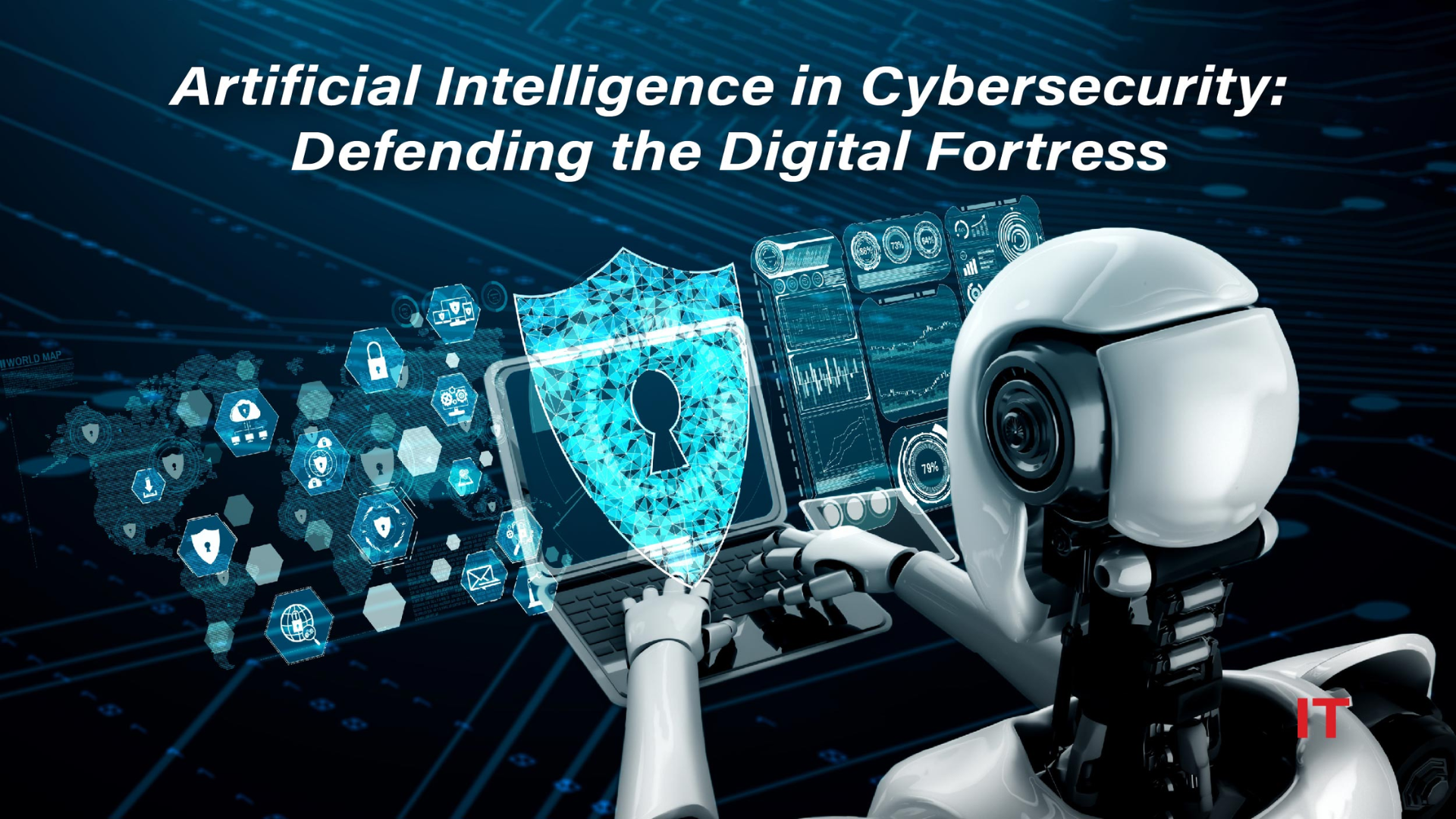
The Symbiotic Shield: Redefining the Future of Cybersecurity in the Age of Artificial Intelligence
For decades, cybersecurity has been a relentless game of cat and mouse, played at human speed. We built walls; attackers found ladders. We crafted stronger locks; they forged more clever keys. It has been a reactive, exhausting cycle of patch and pray. But a fundamental force is entering the arena, one that promises not just to change the game, but to rewrite its very rules. The future of cybersecurity in the age of artificial intelligence is not a dystopian vision of machines attacking machines. It is the emergence of a symbiotic partnership—where human intuition merges with machine intelligence to create a defense that is proactive, adaptive, and profoundly resilient. We are moving from an industrial model of security (building static fortresses) to an organic model (cultivating an intelligent immune system). This transition will redefine the roles of defenders, the nature of threats, and our very expectation of what it means to be secure.
Drawing on the trajectory of both offensive AI development and defensive innovation, the future is taking shape not as a battle, but as an ecosystem. In this new landscape, AI will be the cortex—processing, predicting, and coordinating—while humans provide the conscience, the context, and the creative spark.
Phase 1: The Rise of the Autonomous Cyber Immune System
The first, and most immediate, shift will be from manual, human-led defense to automated, AI-orchestrated protection.
Predictive Threat Hunting and Proactive Patching
Today’s threat hunting is reactive: analysts search for Indicators of Compromise (IoCs) after an attack is known. Future AI systems will perform predictive threat hunting. By analyzing global threat intelligence, your unique network topology, code repositories, and even employee behavior patterns, AI will identify your organization’s most probable attack vectors before they are exploited. It won’t ask, “Are we breached?” but “Given who we are, what will they try next, and where are we weakest?” This leads to autonomous patching and hardening. AI agents will not just recommend patches; they will test them in digital twins of your environment and deploy them during optimal maintenance windows, shrinking the “patch window” from days to minutes.
The Self-Healing Network
Imagine a network that feels its own wounds and stitches them shut. Using AI-driven Self-Healing Security Architectures, systems will detect a breach or anomaly and automatically respond. If a user’s credentials are compromised and exhibit malicious behavior, the system won’t just alert an analyst; it will dynamically isolate that user’s session, redirect them to a secure honeypot for observation, rotate their credentials, and initiate a forensics workflow—all before a human is notified. The network becomes a living organism with reflexive antibodies.
AI-Governed Zero Trust at Scale
Zero Trust (“never trust, always verify”) is powerful but notoriously complex to manage manually. AI will become the central nervous system of Zero Trust. It will continuously analyze the context of every access request—device health, user behavior, data sensitivity, threat landscape—and make real-time, granular trust decisions. It will learn what “normal” looks like for every single entity (user, device, application) and enforce adaptive policies that are invisible during legitimate work but impenetrable during anomalous activity.
Phase 2: The Human-AI Symbiosis: Redefining the SOC Analyst
The Security Operations Center (SOC) will transform from a help desk for alerts to a mission control for AI.
From Alert Triage to AI Orchestration
The SOC analyst of 2030 will not stare at a wall of screens parsing logs. Their primary interface will be a conversational AI co-pilot. They will ask natural language questions: “Co-pilot, show me all entities that interacted with the compromised server in the last 48 hours and rank them by anomaly score.” The AI will synthesize petabytes of data, present a narrative, and recommend actions. The analyst’s value shifts from data processing to strategic decision-making, hypothesis testing, and overseeing the AI’s reasoning.
The Focus on High-Value Human Skills: Intuition, Ethics, and Creativity
AI will handle the scale; humans will handle the edge cases. The future cybersecurity professional will excel in:
-
Intuition & Context: Understanding the business impact of an attack on a specific R&D server versus a marketing server.
-
Ethical Oversight: Making the final call on aggressive countermeasures or dealing with the ethical implications of deception technology.
-
Creative Threat Modeling: Thinking like an adversary to design new security tests and outthink AI attackers that might find novel paths.
-
AI Training & Refinement: Continuously teaching and tuning the defensive AI models, curating data, and identifying their blind spots.
Continuous, Immersive Cyber-Range Training
To stay sharp, defenders will train in hyper-realistic, AI-generated cyber ranges. These simulators will create dynamic, evolving attack scenarios where the AI adversary learns from the defender’s actions, constantly upping the ante. This creates a “gym for cyber reflexes,” keeping human skills honed against the most advanced possible threats.
Phase 3: The New Frontier – Quantum Resilience and Privacy-Preserving AI
Looking further ahead, two paradigm-shifting technologies will dominate the discourse.
Post-Quantum Cryptography (PQC) Transition, Managed by AI
The eventual arrival of quantum computing will break today’s public-key encryption. The migration to quantum-resistant algorithms will be the largest, most complex cryptographic transition in history. AI will be essential in managing this. It will inventory every system, certificate, and data stream; assess its sensitivity and lifespan; prioritize what needs to be migrated first; and automate the implementation and testing of new PQC standards across global, legacy-filled enterprises.
Privacy-Enhancing Computation (PEC) as a Security Primitive
The future tension between security (needing data to detect threats) and privacy (protecting user data) will be resolved by advanced cryptographic techniques like Fully Homomorphic Encryption (FHE) and Federated Learning. AI models will be trained on encrypted data without ever decrypting it. Threat detection can happen on your device or in your cloud without the raw data ever being exposed to the security vendor. Security becomes a feature you can compute on, not just a wall you build around, data. This transforms data privacy from a compliance hurdle into a core security asset.
The Evolving Threat Landscape: The Adversary’s AI Arms Race
Of course, attackers will use AI too. The future is one of AI vs. AI, but with humans firmly in the loop on both sides.
The Age of Adaptive, Persistent Adversaries (APAs)
We will move beyond Advanced Persistent Threats (APTs) to Adaptive Persistent Adversaries. These will be AI-driven attack platforms that don’t just persist, but learn and evolve in real-time within a target environment. They will use reinforcement learning to achieve their goals with maximum stealth, making them far more patient and effective.
The Weaponization of Synthetic Reality
Deepfakes were the beginning. The future threat is the synthetic reality attack—a coordinated, multi-sensory disinformation campaign. An AI could generate a fake but credible video of a CEO, supported by forged internal documents (created by AI), corroborated by a chorus of AI-generated social media personas, all timed to manipulate stock prices or geopolitical stability. Defending against this requires AI that can detect synthetic media at scale and digital provenance standards (like watermarks) to verify authenticity.
Autonomous Cyber-Physical Swarms
The convergence of AI, IoT, and operational technology (OT) will see the rise of swarm attacks against physical infrastructure. Imagine a thousand AI-powered bots compromising a smart city’s traffic light network, not to cause chaos, but to create perfectly timed gridlock to enable a physical crime or to stress the power grid in a specific pattern. Defense will require AI that understands both cyber and physical causality.
The Strategic Imperatives: Building the Future-Proof Organization
To navigate this future, leadership must make foundational shifts.
1. Embed Security into the AI Development Lifecycle (AISecDevOps)
Security can no longer be bolted on. For any company developing AI, AISecDevOps—baking security into the AI model training, deployment, and monitoring pipeline—is non-negotiable. This includes testing for adversarial robustness, ensuring training data integrity, and monitoring for model drift or poisoning.
2. Cultivate a Culture of Cyber-AI Literacy
From the boardroom to the developer floor, understanding the capabilities and limitations of both offensive and defensive AI is crucial. The CISO must become a Chief Intelligence Security Officer, fluent in data science and AI strategy.
3. Invest in Explainable AI (XAI) for Trust and Oversight
We cannot defend what we do not understand. Security AI must be explainable. When an AI makes a critical decision (like isolating a CEO’s account), we must be able to audit its reasoning. Transparency builds trust and enables effective human oversight.
4. Champion Collaborative, Decentralized Defense
The “winner-take-all” model of security vendors will fade. The future is in decentralized, collaborative defense networks. Companies (especially in critical infrastructure) will form trusted collectives where they can share threat intelligence and even pool anonymized data to train collective defense AIs, creating a “neighborhood watch” at internet scale, all while preserving privacy through PEC techniques.
The future of cybersecurity in the age of AI is not a passive state of being protected. It is an active, dynamic state of adaptive resilience. It is a future where our defenses learn as fast as our attackers, where our networks anticipate wounds and heal themselves, and where human ingenuity is amplified, not replaced, by machine intelligence. The goal shifts from building an impenetrable fortress—a futile aim in a connected world—to creating an intelligent organism that can withstand shock, isolate infection, and evolve stronger from every encounter. The age of AI does not spell the end of human-centric security; it heralds the beginning of a more profound partnership, where our collective security is ensured by the best of both worlds: the relentless processing power of machines, guided by the irreplaceable wisdom, ethics, and creative spirit of humanity.
Leave a Reply