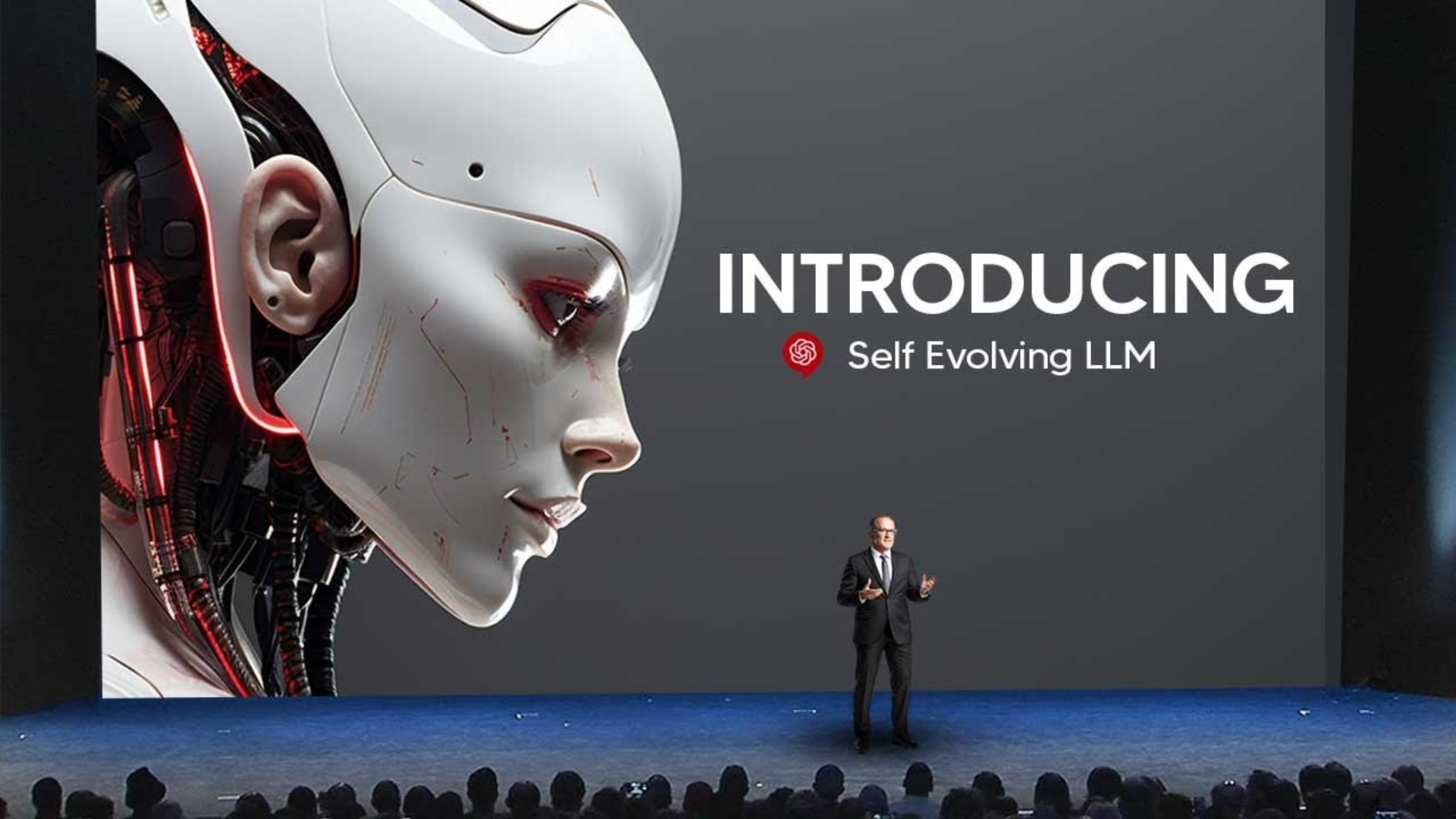
Artificial Intelligence is evolving at a speed that has surprised even the experts. While traditional AI relies on human programming and fixed datasets, self-evolving AI systems can learn, adapt, and optimize themselves over time. These systems are capable of autonomous improvement, adjusting algorithms, discovering patterns, and even creating solutions beyond human foresight.
Recent advancements suggest that self-evolving AI systems are advancing faster than expected, surpassing predictions made just a few years ago. This rapid growth has profound implications for industries, research, security, and the future of human-machine interaction. In this article, we explore what self-evolving AI is, how it works, real-world applications, challenges, and what the future may hold.
What Are Self-Evolving AI Systems?
Definition and Core Concept
Self-evolving AI, also called autonomous AI or self-improving AI, refers to systems capable of modifying their own code, structure, and strategies to improve performance without explicit human intervention. Unlike conventional AI, which requires continuous human updates, self-evolving AI:
-
Learns from its own experiences
-
Optimizes algorithms dynamically
-
Discovers solutions beyond its original programming
This makes it a step beyond traditional machine learning, ushering in a new era of adaptive intelligence.
How It Differs from Traditional AI
Traditional AI systems:
-
Follow predefined rules and training data
-
Require human supervision for updates
-
Have limited adaptability to new environments
Self-evolving AI systems, in contrast, autonomously adapt, generating novel strategies, correcting errors, and optimizing outcomes continuously.
How Self-Evolving AI Works
Feedback Loops and Continuous Learning
Self-evolving AI relies heavily on feedback loops. These loops allow the AI to:
-
Observe outcomes from its actions
-
Compare results against objectives
-
Adjust algorithms for improved performance
Over time, this creates a compounding effect, where the AI becomes increasingly capable and sophisticated.
Genetic Algorithms and Evolutionary Computing
Many self-evolving AI systems use genetic algorithms, inspired by natural selection:
-
Multiple AI “candidates” try different strategies
-
Successful strategies are retained and combined
-
Ineffective ones are discarded
This artificial evolution enables the AI to discover solutions humans may not predict.
Neural Architecture Search (NAS)
Neural Architecture Search allows AI to design its own neural networks for optimal performance:
-
AI tests various network structures autonomously
-
Chooses architectures that maximize accuracy and efficiency
-
Continuously adapts to changing data or tasks
NAS accelerates innovation, making AI systems more efficient and specialized.
Real-World Applications of Self-Evolving AI
Autonomous Vehicles
Self-evolving AI improves autonomous driving systems by:
-
Adapting to unpredictable road conditions
-
Learning from traffic patterns and human behavior
-
Optimizing navigation and safety protocols
These systems can enhance reliability and reduce accidents faster than conventional programming updates.
Financial Services
In finance, self-evolving AI is used for:
-
Adaptive trading strategies
-
Fraud detection and prevention
-
Risk management in dynamic markets
The ability to evolve in real-time gives financial institutions a competitive edge in high-frequency, data-driven environments.
Healthcare and Personalized Medicine
-
Personalized treatment recommendations based on evolving patient data
-
Drug discovery by simulating molecular interactions autonomously
-
Real-time adaptation in predictive diagnostics
This accelerates medical breakthroughs and improves patient outcomes by learning continuously from new data.
Cybersecurity
AI-driven cybersecurity benefits from self-evolving systems by:
-
Detecting previously unknown threats
-
Adapting defenses against evolving malware
-
Automating responses to cyberattacks
These systems allow proactive protection in a landscape where threats evolve rapidly.
Why Self-Evolving AI Is Advancing Faster Than Expected
Increased Computational Power
Modern GPUs, TPUs, and distributed computing enable faster AI training and iteration, accelerating the evolution of self-learning systems beyond prior forecasts.
Access to Massive Data
The proliferation of digital data allows self-evolving AI to learn from more scenarios, leading to faster adaptation and novel solution discovery.
Improved Algorithms
Advances in evolutionary computing, reinforcement learning, and neural architecture search have dramatically increased AI efficiency, enabling autonomous improvement at unprecedented rates.
Implications of Rapid Self-Evolving AI
Opportunities
-
Faster innovation across industries
-
Autonomous scientific discovery and research acceleration
-
Adaptive, personalized services in healthcare, finance, and education
Risks and Challenges
-
Lack of interpretability: AI may develop strategies humans cannot fully understand
-
Ethical dilemmas: Autonomous systems making critical decisions
-
Security concerns: Self-evolving AI could be exploited if misaligned with human goals
Expert Recommendations
Experts emphasize:
-
Continuous monitoring of AI behavior
-
Incorporating explainable AI techniques
-
Developing regulations and safety standards to guide autonomous AI development
The Future of Self-Evolving AI
Toward Artificial General Intelligence (AGI)
Self-evolving AI is a key stepping stone to AGI, as autonomous improvement allows AI to:
-
Handle multiple domains
-
Learn independently from minimal human input
-
Adapt to unknown scenarios
Human-AI Collaboration
The rapid advancement of self-evolving AI highlights the need for human-AI co-evolution, where:
-
Humans provide ethical oversight
-
AI handles optimization and experimentation
-
Together, they solve problems faster than either could alone
Long-Term Considerations
-
Developing AI that aligns with human values
-
Ensuring equitable access to self-evolving AI benefits
-
Balancing autonomy with control to prevent unintended consequences
Conclusion
Self-evolving AI systems are advancing faster than expected, transforming industries, accelerating research, and reshaping the future of human-AI interaction. By continuously learning, adapting, and optimizing, these systems push the boundaries of what AI can achieve, moving us closer to autonomous intelligence that rivals or complements human cognition. While opportunities are immense, the rapid evolution also underscores the importance of ethical governance, safety protocols, and human oversight. The era of self-evolving AI is not just approaching—it is already unfolding, and preparing for its impact is critical for society, industry, and scientific progress.
Frequently Asked Questions
What are self-evolving AI systems?
Answer: Self-evolving AI systems are autonomous AI that can modify their own algorithms, learn from experience, and improve performance without direct human intervention.
How do self-evolving AI systems differ from traditional AI?
Answer: Unlike traditional AI, which relies on predefined rules and human updates, self-evolving AI continuously adapts, optimizes, and discovers new solutions independently.
Why are self-evolving AI systems advancing faster than expected?
Answer: Advances in computational power, access to massive datasets, and improved algorithms like evolutionary computing and neural architecture search have accelerated their development.
What are some real-world applications of self-evolving AI?
Answer: Applications include autonomous vehicles, adaptive financial trading, personalized healthcare, cybersecurity, and automated scientific discovery.
Can self-evolving AI surpass human intelligence?
Answer: While currently focused on specialized tasks, continuous self-improvement could eventually lead to AI systems approaching human-level problem-solving in specific domains.
What are the risks of self-evolving AI systems?
Answer: Risks include lack of transparency (black-box behavior), ethical dilemmas, potential misuse, security threats, and unintended consequences from autonomous decision-making.
How do experts monitor self-evolving AI?
Answer: Experts implement continuous monitoring, explainable AI techniques, and safety protocols to ensure AI behavior aligns with human objectives and ethical standards.
How do self-evolving AI systems learn and improve?
Answer: They use feedback loops, reinforcement learning, genetic algorithms, and neural architecture search to analyze outcomes and optimize strategies autonomously.
Will self-evolving AI replace human jobs?
Answer: Not entirely. These AI systems augment human capabilities, handling complex or repetitive tasks while humans focus on creativity, strategy, and oversight.
How can society prepare for self-evolving AI?
Answer: By developing ethical frameworks, AI literacy programs, equitable access policies, and interdisciplinary collaboration, society can maximize benefits while minimizing risks.
Leave a Reply