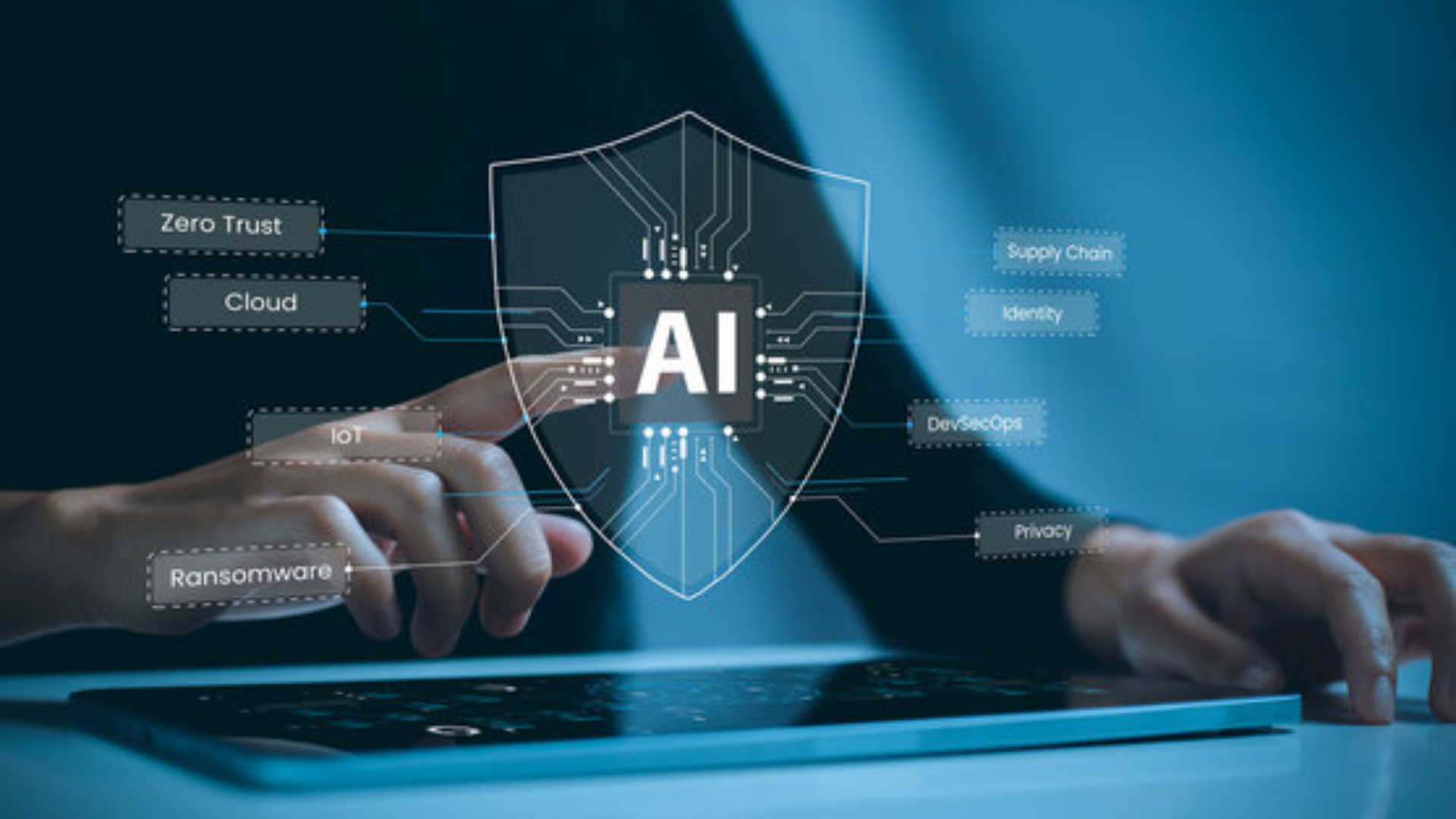
You’ve done everything right. You’ve installed the recommended antivirus, you keep your firewall active, you run regular vulnerability scans, and you mandate annual security training. Yet, the breach reports keep climbing. There’s a creeping, silent suspicion that the very foundations of your digital defense are becoming obsolete. You are not wrong. Why traditional cybersecurity is failing against AI is the central, urgent question of our digital age. It’s not about a lack of effort; it’s about a fundamental mismatch between a static, rules-based defense system and an adaptive, intelligent opponent. At TrueKnowledge Zone, we’ve analyzed post-breach forensics for over two decades, and a consistent, chilling pattern has emerged in the last three years: the tools that stopped yesterday’s threats are being systematically outmaneuvered by a new generation of attacks that learn, evolve, and think. The castle walls are still standing, but the enemy is no longer trying to knock down the gate. They are being invited in through a perfectly forged key, or simply learning to become part of the wall itself.
The Foundational Flaw: Static Rules vs. Adaptive Intelligence
Traditional cybersecurity is built on a paradigm of knowns: known signatures, known vulnerabilities, known bad IP addresses. AI-powered attacks thrive in the realm of the unknown and the newly created.
Signature-Based Detection: Chasing Ghosts
Legacy antivirus and Intrusion Detection Systems (IDS) operate like a bouncer with a photo book of known criminals. If the malware’s “face” (its digital signature) is in the book, it’s blocked. AI-powered malware uses generative techniques to create a new, unique “face” for every single infection—a process called polymorphism. It’s the functional equivalent of a criminal wearing a flawless, real-time disguise for each door they walk through. The photo book is rendered useless because the attacker never looks the same way twice. I’ve seen polymorphic ransomware variants spawn over 10,000 unique hashes in a single campaign, each one a fresh, undetectable file to a signature-based scanner.
Rule-Based Heuristics: Predictability as a Weakness
Systems that rely on “if-then” rules (e.g., “if five failed logins occur within a minute, block the IP”) are easily mapped and circumvented by a patient AI. Using reinforcement learning, an AI attacker can probe defenses with minuscule, varied attempts—two failed logins from IP A, a three-hour pause, three from IP B—learning the precise thresholds and timing that avoid triggering the rule. It treats your security rulebook as a puzzle to be solved, not a barrier to be stormed.
The False Comfort of Compliance Checklists
Frameworks like PCI-DSS or HIPAA are essential baselines, but they are inherently retrospective. They ensure you are protected against yesterday’s attack methods. An AI attacker is not constrained by compliance manuals; it innovates in real-time. Achieving a “compliant” status can create a dangerous illusion of security, while an AI is quietly exploiting a vector the framework never considered.
The Evasion Playbook: How AI Sidesteps Pillar Defenses
Each cornerstone of the traditional security stack is being deliberately and intelligently bypassed.
Bypassing Perimeter Defenses (Firewalls, WAFs)
Web Application Firewalls (WAFs) look for patterns of malicious web traffic. AI is now used to generate “adversarial examples”—malicious HTTP requests that are subtly perturbed to appear benign to the WAF’s pattern-matching algorithms. In one documented case, an AI systematically tweaked SQL injection payloads character-by-character until they sailed through a top-tier WAF, turning a blocked attack into a successful data breach. The firewall saw harmless gibberish; the database saw executable commands.
Fooling Endpoint Protection
Beyond signatures, modern Endpoint Detection and Response (EDR) tools look for suspicious behavior. AI-powered malware now includes “living off the land” (LotL) techniques taken to an extreme. Instead of dropping a malicious executable, the AI might inject code into a perfectly legitimate system process (like svchost.exe or powershell.exe) and use that process’s inherent functions to carry out its mission. The behavior, at a process level, looks normal. The intent is malicious, a distinction most EDR struggles to discern without causing massive false positives.
Neutralizing Threat Intelligence Feeds
Many defenses rely on feeds of known bad IPs, domains, and file hashes. AI automates the lifecycle of attack infrastructure. It can spin up thousands of new cloud servers, register domains, and deploy malware, use them for a short, devastating burst of activity, and then discard them—all before those indicators ever make it into a threat intelligence feed. By the time the “block list” is updated, the attacker’s infrastructure has been dead for 24 hours, replaced by a fresh, unknown batch.
The Human Firewall: When Social Engineering Becomes Science
The most robust technical controls are designed to be bypassed by a human with legitimate access. AI has turned this weakness into a primary attack vector.
The End of “Spottable” Phishing
Training that teaches users to look for poor grammar, strange salutations, or mismatched email addresses is becoming obsolete. AI-powered phishing engines like WormGPT produce linguistically perfect, context-rich emails. They can mimic the writing style of your CEO by training on their past public emails, reference an actual ongoing project, and be sent at the precise time of day you’d expect a communication. The human “gut check” fails because nothing feels off.
Deepfakes: Breaching Trust Itself
Traditional security assumes that a voice call from your boss, or a video message from a colleague, is a reliable authenticator. AI deepfakes shatter that assumption. We’ve moved from crude impersonations to real-time voice cloning and highly convincing video synthesis. The $35 million deepfake CEO scam was a watershed moment, proving that the ultimate authentication factor—personal recognition—can be algorithmically counterfeited. No amount of password complexity protects against a fabricated order from a trusted voice.
Automated Reconnaissance for Micro-Targeting
Before, profiling a target for spear-phishing required days of manual research. AI can now scrape and correlate data from LinkedIn, GitHub, Twitter, company websites, and data breaches in minutes, building a comprehensive psychological and professional profile. It can identify which employee is most vulnerable to what kind of pressure (authority, urgency, camaraderie) and craft the perfect lure. The attack is personalized not just in name, but in psychological design.
The Scale and Speed Problem: Humans Can’t Compete
The operational tempo of AI-driven campaigns creates overwhelming pressure.
The Volume of Attacks is Logistically Unmanageable
A human-led phishing campaign might send 10,000 emails. An AI-powered one can send 10 million, each one uniquely worded and targeted. This volume alone can drown SOC (Security Operations Center) teams in alerts, leading to critical alerts being missed amidst the noise—a tactic known as “alert fatigue” weaponization.
The Speed of Exploitation Closes the “Patch Window”
The traditional model gives defenders a “patch window”—the time between a vulnerability being disclosed and it being widely exploited. AI compresses this window to near zero. It can ingest a new CVE description, generate a working exploit, and begin attacking vulnerable systems globally, all within hours. Human IT teams, bound by change management and testing procedures, simply cannot patch at this machine speed.
Continuous Adaptation Renders Static Defenses Permanently Behind
A traditional defense is deployed and configured. It remains static until an update. An AI attacker learns from every interaction. If one tactic fails, it adapts and tries another. It treats your network as a dynamic environment, constantly probing and learning its specific weaknesses. Your firewall is a fixed wall; the attacker is a fluid that finds the crack you didn’t know was there.
Case Study: The AI Botnet That Learned to Hide
A European telecom provider’s SOC noticed strange, low-level network chatter but no definitive malware alerts. After months, they discovered a botnet that demonstrated clear AI behavior. The malware, once installed, didn’t beacon to a command center. Instead, it used a lightweight ML model to study normal network traffic patterns for that specific device—a server’s periodic database calls, a user’s typical web browsing times. It then only transmitted stolen data in tiny bursts that perfectly mimicked this legitimate traffic pattern, hiding its exfiltration in plain sight. Traditional anomaly detection, which looks for large data transfers or calls to known bad domains, saw nothing. The botnet wasn’t hiding; it was camouflaging itself as the environment.
The Path Forward: Evolving Beyond the Traditional Model
Admitting the failure of the old model is the first step toward building a resilient new one. The goal is not to discard traditional tools, but to elevate them with context and intelligence.
Shifting from Prevention to Assume-Breach (Zero Trust)
The Zero Trust model acknowledges that perimeter defenses will fail. It operates on “never trust, always verify.” Every access request, whether from outside or inside the network, must be authenticated, authorized, and encrypted. This limits the “blast radius” of an AI that gains an initial foothold, as it cannot freely move laterally. It turns your network from a vulnerable castle into a series of fortified, individual rooms.
Embracing Behavioral Analytics (UEBA)
Instead of looking for known bad things, we must look for abnormal things. User and Entity Behavior Analytics (UEBA) uses AI to establish a behavioral baseline for every user, device, and application. When the AI-powered attacker (or a compromised account) begins to act—accessing files they never do, logging in at strange hours, making unusual network connections—the UEBA system flags it as an anomaly, regardless of whether the tools or credentials used are “legitimate.”
Fighting AI with AI: Defensive Machine Learning
The only effective counter to AI-speed attacks is AI-speed defense. This isn’t about a single silver bullet, but about augmentation:
-
AI-Powered SOAR: Automating the response to common attack patterns, freeing human analysts for complex hunting.
-
Predictive Threat Hunting: Using AI to model likely attack paths based on your unique assets and external threat intel, guiding preemptive hardening.
-
Deception Technology: Deploying intelligent, enticing honeypots that engage with AI attackers, studying their behavior and containing them.
Revolutionizing Human Training
Awareness training must evolve from “spot the fake email” to “verify every unusual request.” It must include immersive drills with deepfake audio and hyper-personalized phishing simulations. The human must become a savvy verifier, trained to use secondary, out-of-band channels (a quick phone call, a separate messaging app) to confirm any consequential request.
Traditional cybersecurity is not failing because it’s bad. It’s failing because it was built for a different era—an era of human-paced, repetitive attacks. It is being outpaced by a force that learns, adapts, and innovates at a scale and speed that static systems and fatigued humans cannot match. The solution lies not in higher walls, but in smarter sentinels. It requires a fundamental shift in philosophy: from a fortress mentality to one of intelligent resilience, from trusting perimeters to verifying every single transaction, and from relying on what we know to defending against what we can learn. The era of set-and-forget security is over. The new era demands continuous learning, adaptation, and a clear-eyed understanding that our greatest defense is a humility that acknowledges the intelligence of the new threat, and matches it with our own.
10 Frequently Asked Questions (FAQs)
1. Does this mean my antivirus and firewall are completely useless?
Not useless, but insufficient alone. They form a necessary baseline layer that blocks known, high-volume threats. However, they should be viewed as the outer fence, not the entire security system. They will not stop a determined, AI-powered attack.
2. What’s the single biggest weakness AI exploits?
Predictability. Traditional systems are predictable in their rules and responses. AI excels at mapping this predictability and finding the edges and exceptions it can slip through.
3. Can AI create truly new, never-before-seen cyber attacks?
Yes. Through techniques like reinforcement learning and generative AI, systems can experiment with novel attack combinations and code that achieve a malicious objective (like data exfiltration) in ways a human might not conceive of, creating genuinely novel attack vectors.
4. Are small businesses safer because they’re less likely to be targeted by AI?
No. AI automates target discovery. Small businesses are often targeted more by AI-driven campaigns because they are identified as having weaker, more traditional defenses—making them ideal testbeds or easy entry points into larger partner networks.
5. Is Zero Trust a silver bullet against AI attacks?
No solution is a silver bullet, but Zero Trust is the most effective architectural response. It severely limits an AI attacker’s ability to move and cause damage after initial compromise, buying critical time for detection and response.
6. How can a human possibly spot an AI-generated phishing email?
Often, they can’t. The strategy must change from “spotting” to “verifying.” If an email asks for anything unusual (login, data, payment), assume it could be AI-generated and confirm via a separate, trusted channel before acting.
7. Will we need AI to defend against AI? Is that dangerous?
It’s both necessary and carries risk. Yes, defensive AI is essential to match the scale and speed. The danger lies in over-reliance and “algorithmic blindness.” The most effective model is Human-in-the-Loop AI, where AI handles scale and pattern recognition, but humans provide context, ethics, and final judgment on critical actions.
8. What traditional security practice is still highly effective even against AI?
Rigorous, phishing-resistant Multi-Factor Authentication (MFA). Using a FIDO2 security key or an authenticator app creates a barrier that is extremely difficult for AI to bypass, as it requires physical possession or a time-based code separate from the compromised credential.
9. How fast is this change happening?
Exponentially. The integration of AI into attack toolkits, once a niche capability, has become mainstream on dark web markets in the last 18-24 months. The pace of defensive adoption is struggling to keep up.
10. Where should my company start if we’re still relying on traditional tools?
Begin your transition immediately:
-
Adopt Phishing-Resistant MFA everywhere.
-
Start a Zero Trust pilot project for your most critical data or systems.
-
Upgrade from basic antivirus to an EDR/XDR platform with behavioral analytics.
-
Retrain your team on verification, not just identification, of threats.
The goal is to start layering intelligent, adaptive defenses on top of your existing static ones.
Leave a Reply